Monday, 17 December 2012

Part Three of my Rolex Factory Articles


For the last fifty years Rolex have pursued one policy with an almost myopic vision; that of self-sufficiency. In that period, they have purchased bought almost all of the sub-contractors who used to supply them. Genex, who made cases were one of the first to be bought, then they bought Gay Freres, who made their bracelets and around a decade ago they bought Beyeler who were one of their major dial suppliers. These suppliers, and many more were scattered all around Geneva and throughout Switzerland, at one point Rolex had 27 factories; hardly the height of efficiency, so, starting in the 1990s they began a decade long programme of consolidation.
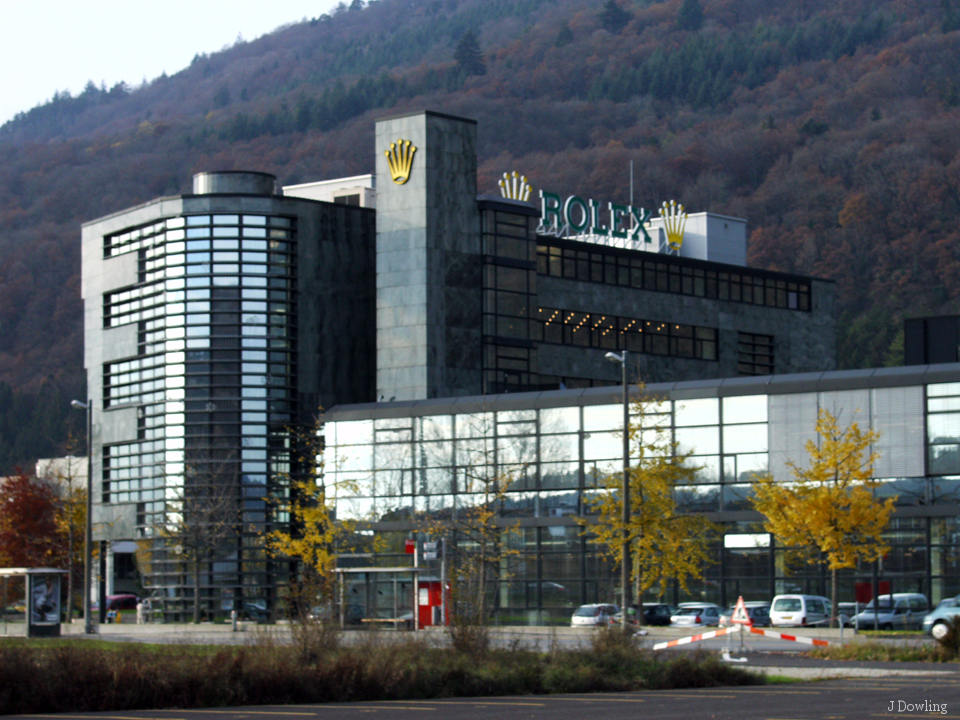
The 27 factories became three mega factories; dials were made at Chéne-Bourg, which is also where diamond and jewel setting takes place; Plan les Ouates is where both cases and bracelets are manufactured and where Rolex operates its own gold foundry; whilst Acacias is where final assembly and testing takes place. The Acacias plant is also the firm’s world HQ and where all of their research & development is carried out.
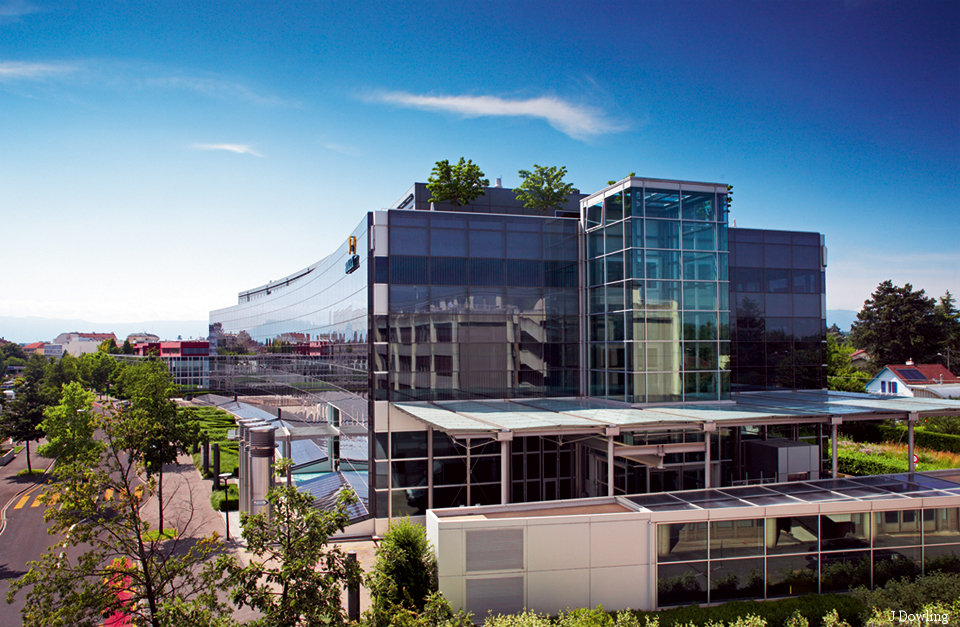
Rolex Chéne-Bourg
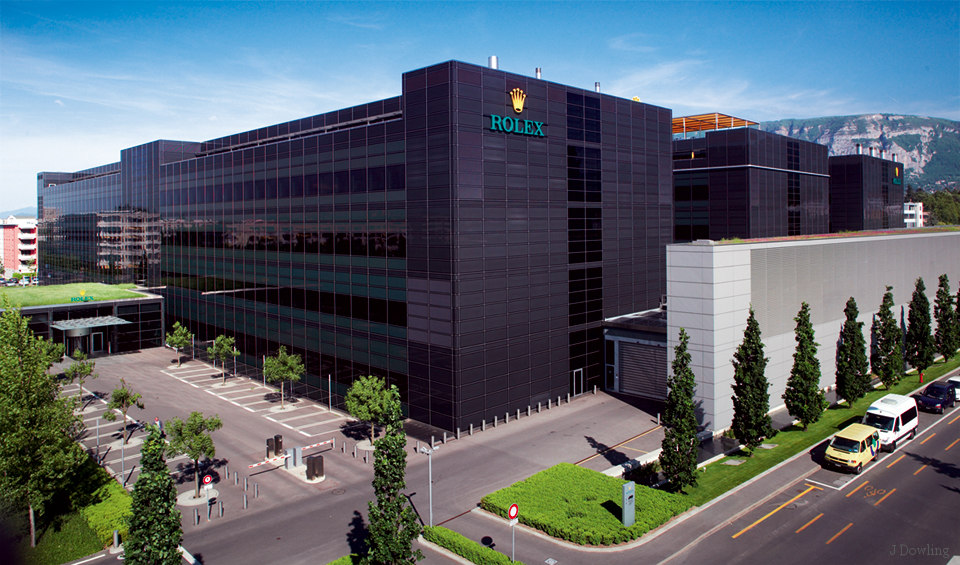
Rolex Plan les Ouates
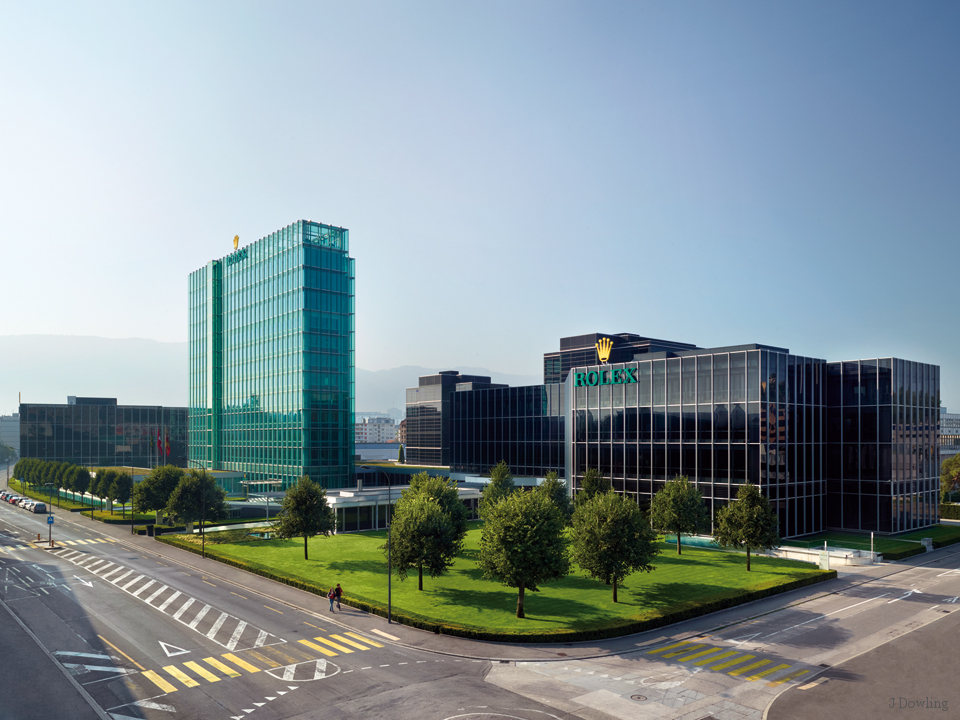
Rolex Acacias
Yet despite all this consolidation, there was one part of the watch that Rolex didn’t make, and that was a rather important part, the movement. Although all the movements came from one factory which even bore the name Rolex, they didn’t own it, it was owned by the Aegler/Borer family; a family arguably as important as Wilsdorf in the history of Rolex. To understand the relationship we have to travel back over a century to the very founding of Rolex; actually, even further back, to the founding of Wilsdorf and Davis in 1905. In these early days, the firm didn’t make watches, rather it assembled them; buying movements from a few Swiss firms and putting these in cases bought from firms in the UK and in Switzerland. The vast majority of the watches they were selling were ladies’ watches, because (at this point) almost no men wore wristwatches.
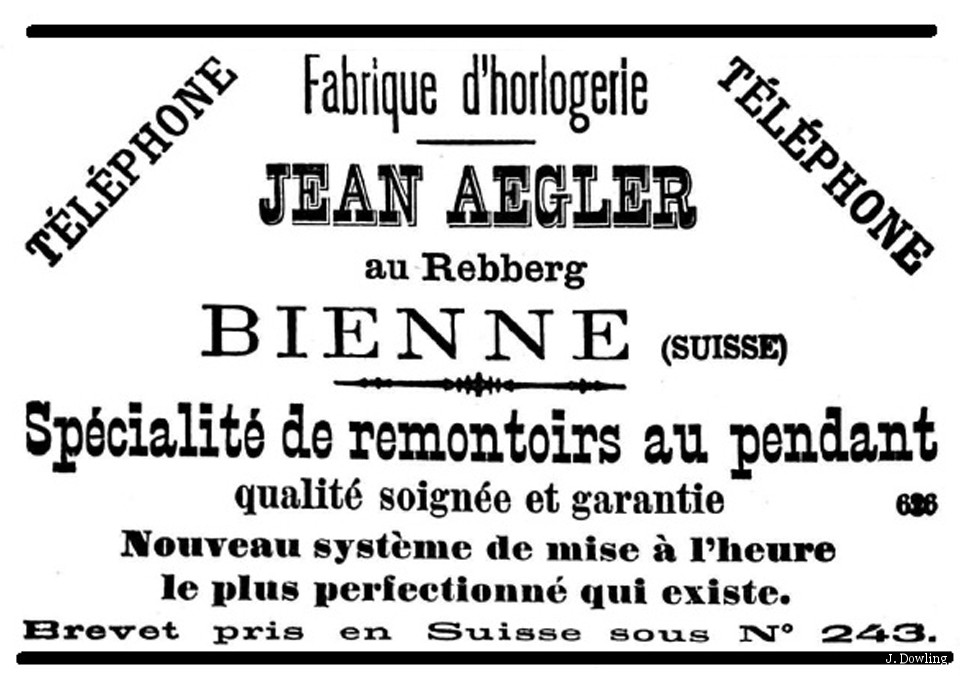
As the business progressed, Wilsdorf decided to return to Switzerland, where he had previously worked, to seek out a single movement supplier, rather than the several he had been using. His eye alighted on the firm of Jean Aegler in Bienne, as they specialised in movements for ladies’ watches, as this advertisement for the original company emphasises.
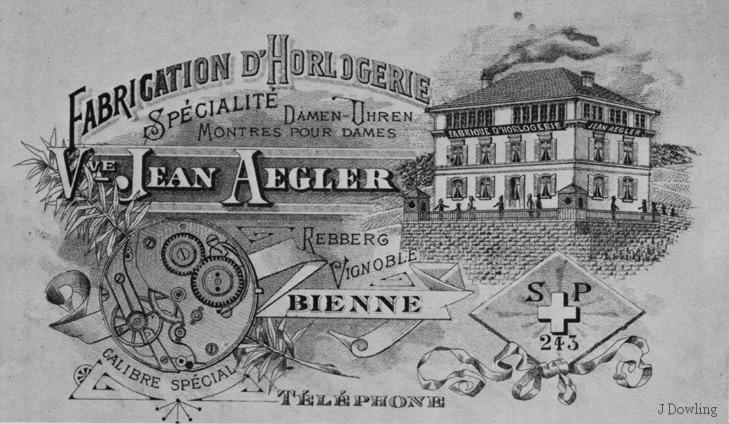
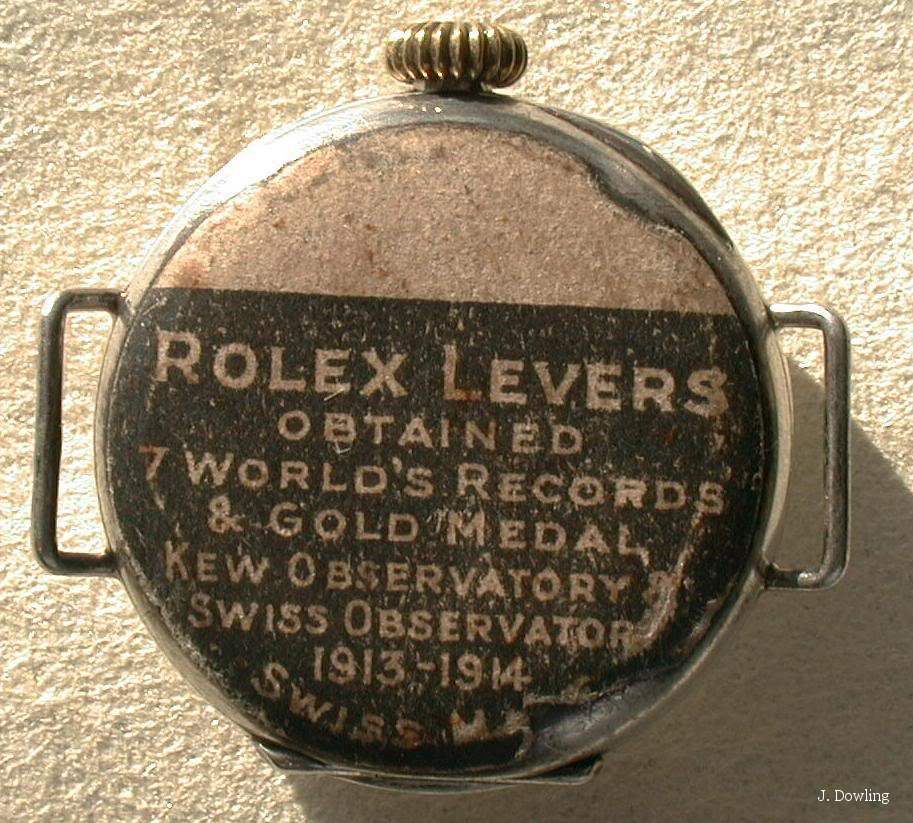
He developed a close relationship with Hermann Aegler (one of Jean Aegler’s sons) and subsequently gave him the largest order for small watch movements ever placed in Switzerland. What was special about Aegler was that they specialised in Lever Escapement movements at a time when almost all small movements had Cylinder Escapements, which are inherently less accurate. Look at the label on the back of this 1912 Rolex, powered by a Rebberg movement from Aegler, the word ‘Lever’ is as prominent as ‘Rolex’.
Over the next few years the relationship between Rolex and Aegler blossomed, each riding on the popularity of the wristwatch, in 1920 Hermann Aegler became one of the owners of Rolex when he purchased 6,960 shares and was appointed to the board, along with Wilsdorf and Davis. By now Rolex was Aegler’s largest client and their second largest was the US firm Gruen. In the late 1920s two important things happened, Hermann’s nephew Emile Borer became technical director at Aegler and the relationship between Aegler and its two most important clients became formalised for the first time. Both Rolex & Gruen purchased shares in Aegler, which was then renamed “Aegler, Society Anonyme, Manufacture des Montres: Rolex et Gruen Guild A” which means “Aegler Inc; makers of watches (actually movements) for Rolex & Gruen Guild A” (the Guild A watches were the highest grade watches that Gruen sold). For the first time Rolex owned a piece of its own movement manufacturing operation.
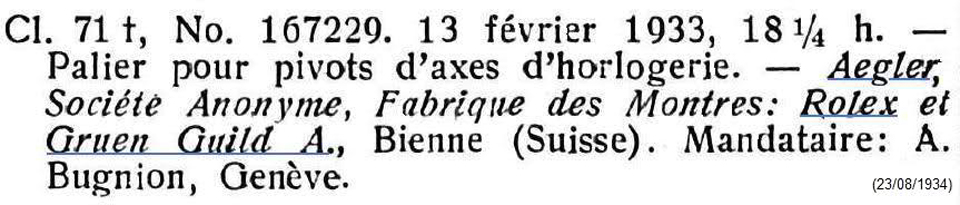
What was quite funny was that both Rolex and Gruen liked to imply that the factory, which was still majority owned by the Aegler/Borer family, was actually owned by each of the watch firms. Have a look at the image in Gruen’s advertising.
and at one from a similar period in a Rolex publication;
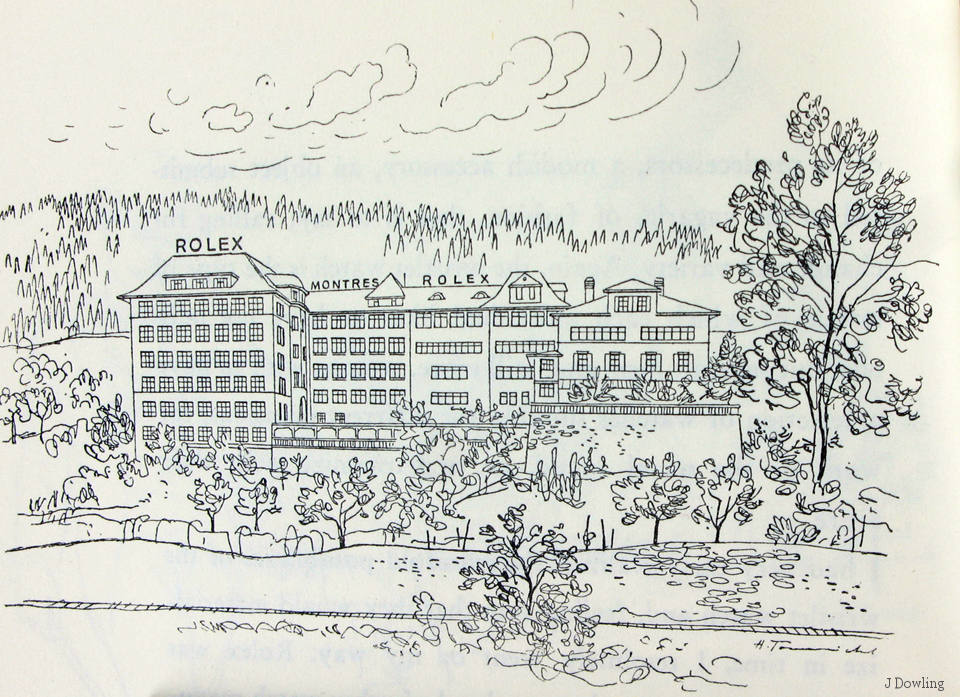
The interesting thing to note is that both these illustrations are actually drawings, because neither of them reflects the real signage on the factory.
Towards the end of the 1930s, Gruen sold their shares in Aegler back to the factory and at that time Rolex Geneva did the same thing; simultaneously with this, Aegler sold their Rolex shares back to Wilsdorf. This meant that the two factories now had single family ownership; Geneva with Wilsdorf and his wife, May and Bienne with the Aegler/Borer family. However, this did not reflect a worsening relationship between the two, rather it signified a new stage in the relationship; the Aegler factory was renamed “Manufactre des Montres Rolex SA” and the two families agreed that, from now on, Geneva would only use movements from Bienne and that Bienne would only sell movements to Geneva.
This convivial, yet completely informal, relationship lasted for almost seventy years, but in March 2004 an email landed in my in-box which amazed me; Rolex Geneva had bought Rolex Bienne outright; and, not long after, the consolidation masterplan was modified to include the Bienne facilities.
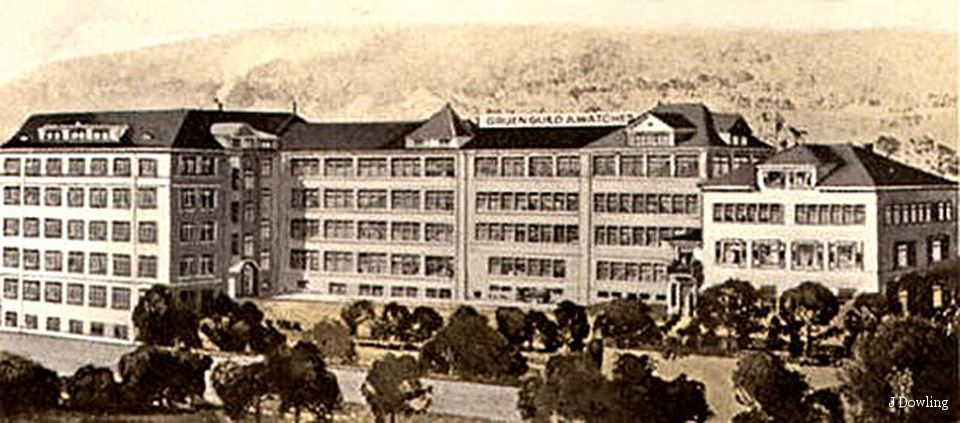
Over the years, the Bienne factory had been expanded to meet the increased production needs, but it was already becoming cramped; take a look at the image below.
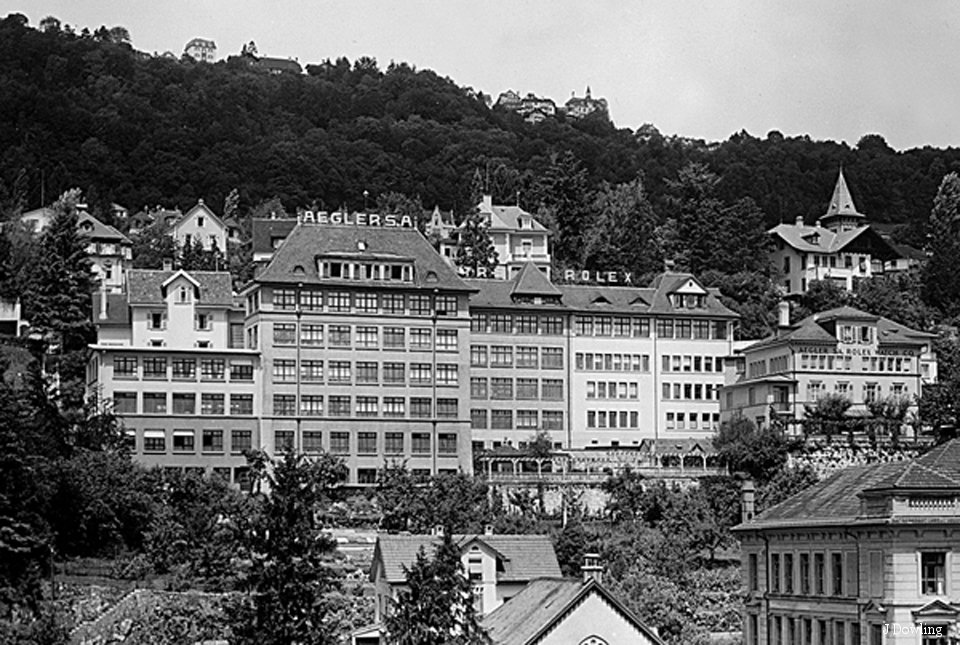
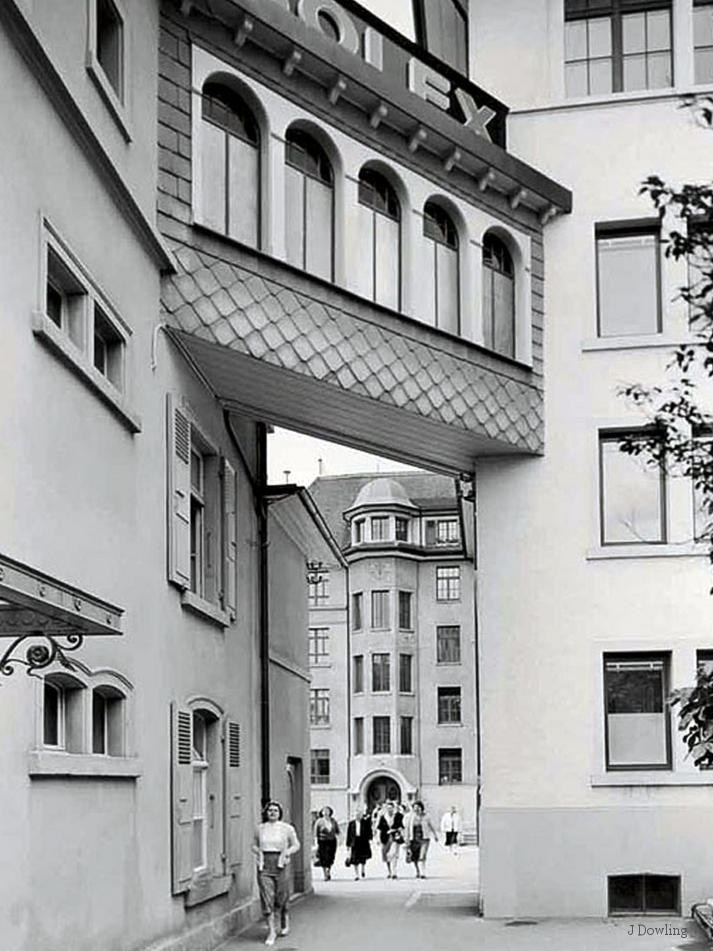
The tallest building, in the centre with the word “Aegler” on the roof was the original Jean Aegler building and all the others were added on, over the years, sometimes this involved parts of the complex being on different sides of the road, connected by overhead bridges.
So, even prior to the acquisition, it was decided to move to a green field site on the outskirts of Bienne and the first stage of the move to the new facility at Champs-de-Boujean was made in 1993, with a subsequent move in 2003. In other words, Rolex Bienne was out of the old factories even before Rolex Geneva purchased them. But two years after the purchase, Rolex bought a 46,000 Sq M site adjacent to the Champs-de-Boujean site. For those of you unused to metric measurements, the new site is the equivalent of over six US Football fields and is connected to the existing site which is the same size; in other words the new Rolex Bienne facility is the size of 13 US Football fields.
Construction on the site began in the summer of 2009 and almost exactly three years later, the site was ready for the official opening. The delays between the purchase of the site and the start of construction were due to the decision to make the new factories in the mould of the Rolex Geneva ones, with high levels of energy efficiency and a very sophisticated parts storage and retrieval system.
I do half a dozen watch factory visits a year; and with almost all the major brands, there is one constant: none of them allow photography within the production areas. But this isn’t because they don’t want their competitors to know what is going on; rather it is because they don’t want us customers to know that the inside of one watch factory looks just like every other watch factory. A few Electro erosion machines and banks of CNC controlled multi axis drilling & boring machines. And there isn’t even much variety amongst the machines, as all of them come from a very small group of suppliers. Not at Rolex, who make so many watches that they are in the privileged position to design and commission much of their own production machinery. So, the Rolex factory doesn’t look like everyone else’s; for example, let’s talk about security; watches are small, portable and high value. So, many firms will lock away their watches, which are in the process of production, every night in a safe like this:
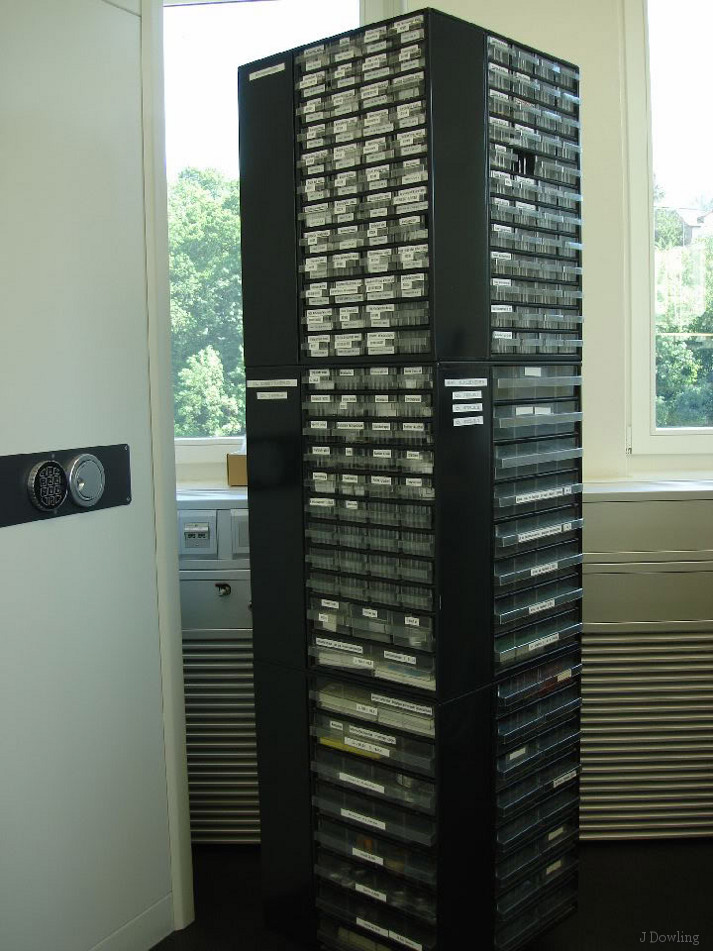
This is the Rolex equivalent at the new Bienne facility:
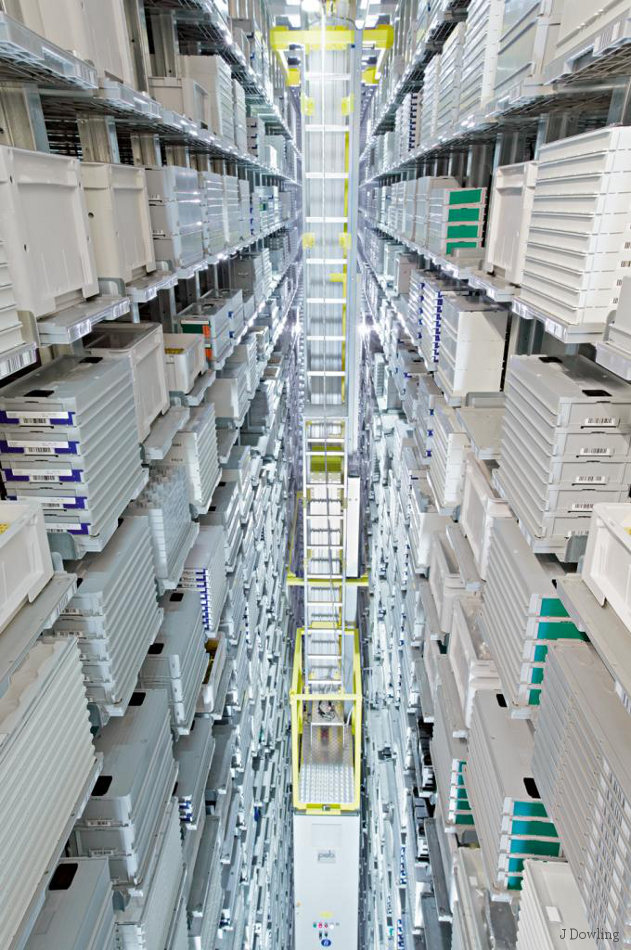
Three stories high, but all underground, the automated stocking system is a high-security vault, located on the underground floors of the new building.
Consisting of 14 aisles of shelves, each alround 30 feet high, it has a total of more than 46,000 storage compartments.
Each of these spaces is able to receive parts in various forms of packaging placed on transport trays. In total, the vault is able to store tens of millions of components. Each aisle is served by conveyor robots –14 in all – (one per aisle) which pick up from the shelves the required trays and automatically place them on the distribution conveyors which go to the various working areas. These conveyor robots move at 10 feet a second. The delivery takes place via this vast horizontal conveyor network, including four vertical distribution towers similar to elevators which are almost 90 feet tall. The system is so efficient that it takes barely a few minutes to deliver the tray to its destination.
On each floor, near the distribution tower, a delivery station allows the users to pick up the trays they have ordered from stock and to send back those that are to be returned for storage. In total, 22 stations are set up, two of which are double: one at the receiving docks and the other dedicated to the checking and washing of components delivered by suppliers.
Computers control the automated stocking system and all the flows. A routing system coordinates some 60 programmable controllers, which manage the tray movements under way and guide the trays between the stock area and the workshops. The whole installation is continuously overseen, 24 hours a day, by an extremely high-performance software program.
Because the whole operation is computer controlled and parts can be accessed at any part of the factory, there is no need for a human being ever to enter the space; so it is not only an automated storage and retrieval system but it is also a very high security vault, containing literally millions of parts, worth millions of Swiss Francs.
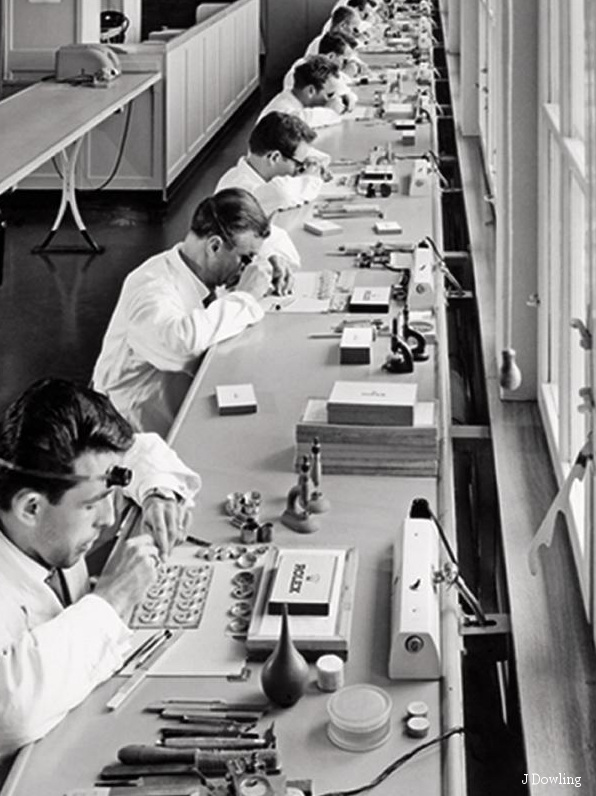
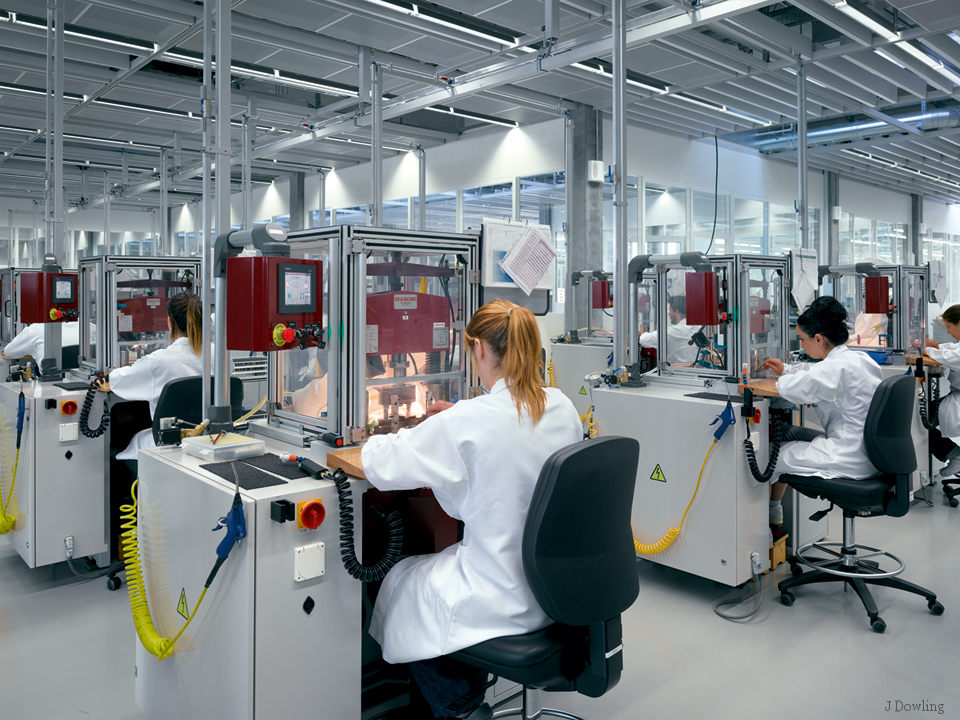
Earlier I talked about the machinery that Rolex use, what is important to understand is that this machinery is used to produce the parts, the assembly of those parts is still done by hand, the way it has always been done at Rolex.
Here are the assemblers at Rolex, hard at work in the 1950s:
And here they are in the new Bienne facility:
The most specialised workers at Bienne are the folks who produce the Parachrom hairspring; which is completely made at Bienne; right from alloying the special Rolex patented alloy, all the way to making the Breguet overcoil before it is attached to the balance wheel.
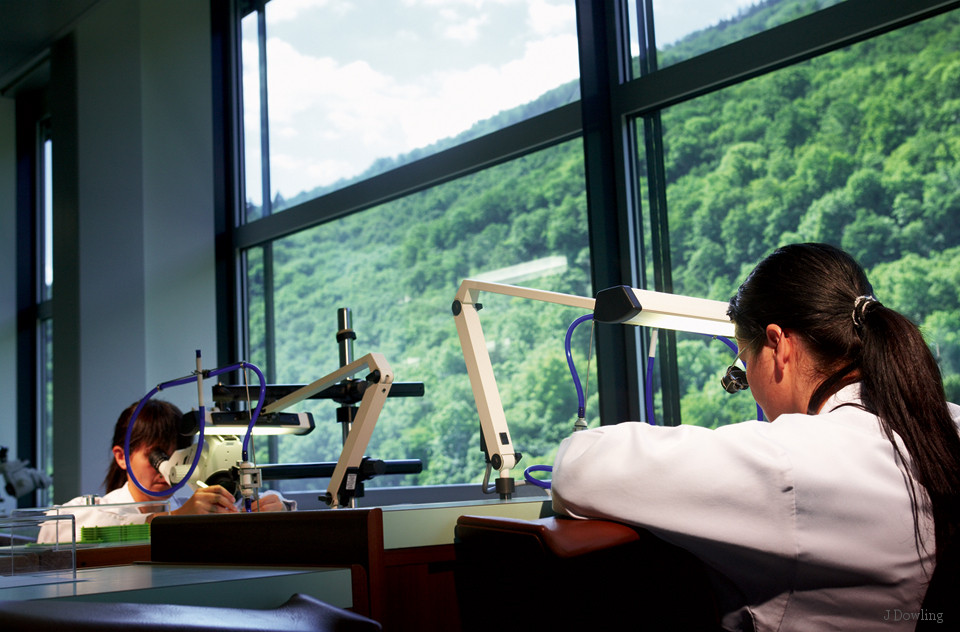
Here are some of those folks at work:
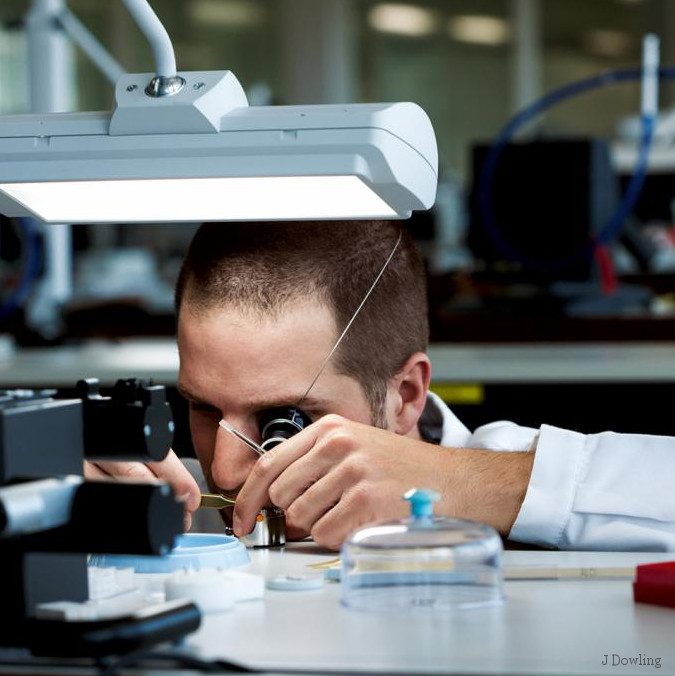
In the lower image you can see how the view from the windows is on to a forest, although the site is not far out of Bienne it is not only set in a green environment, it is a very ‘green’ building, following in the footsteps of the new Rolex Geneva factories.
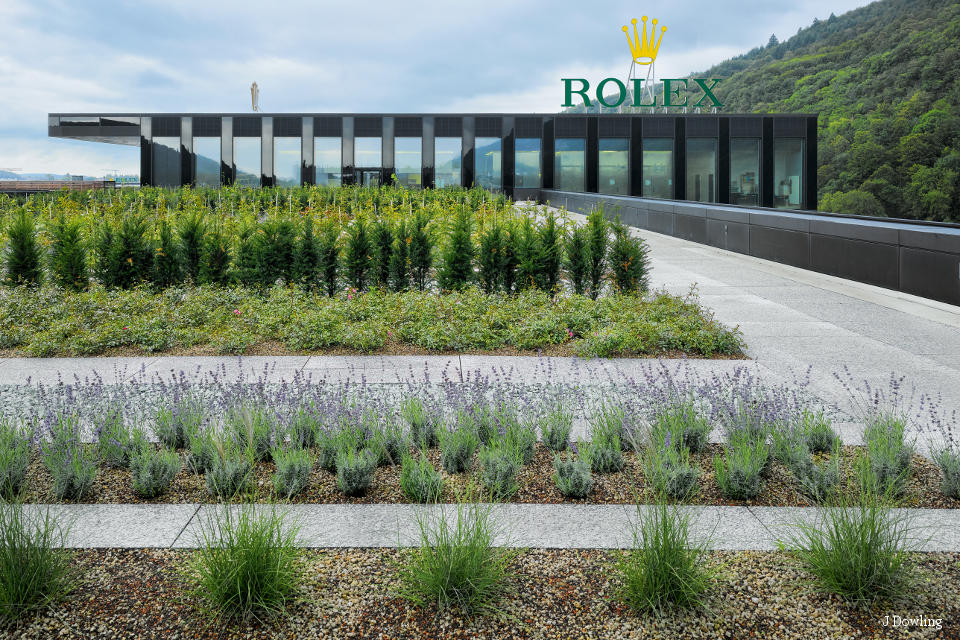
Like them, there is a rooftop garden, where water used by the factory is used to water the plants, many of which are herbs used in the kitchens in the nearby rooftop restaurant. The plants and their soil also provide a very efficient thermal barrier for the buildings, preventing heat from escaping during the cold months and protecting the interior from the heat of the sun during the summer.
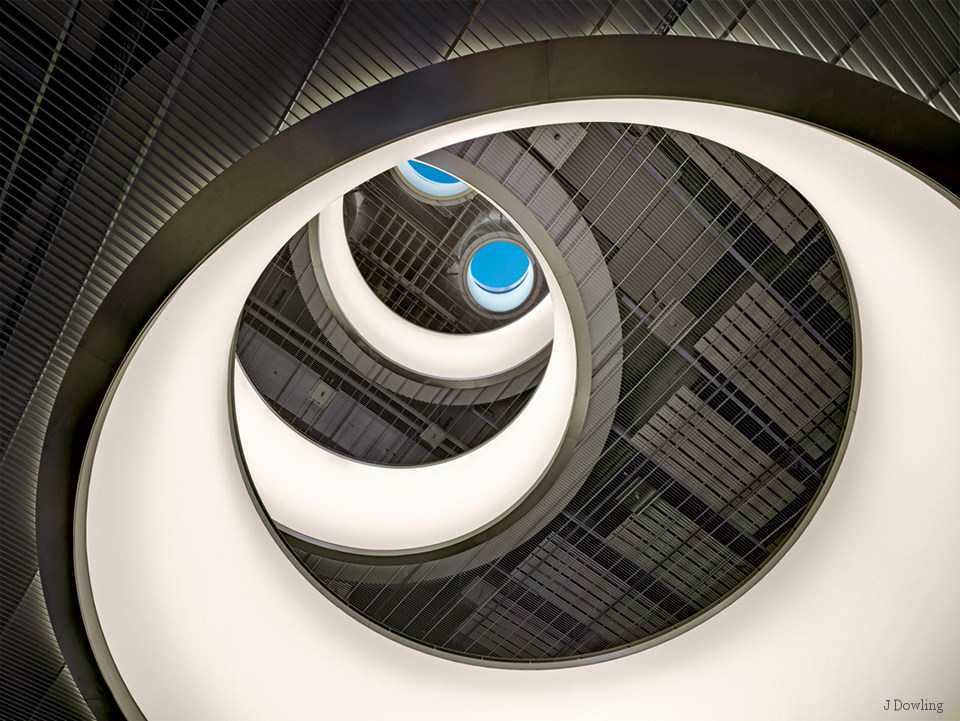
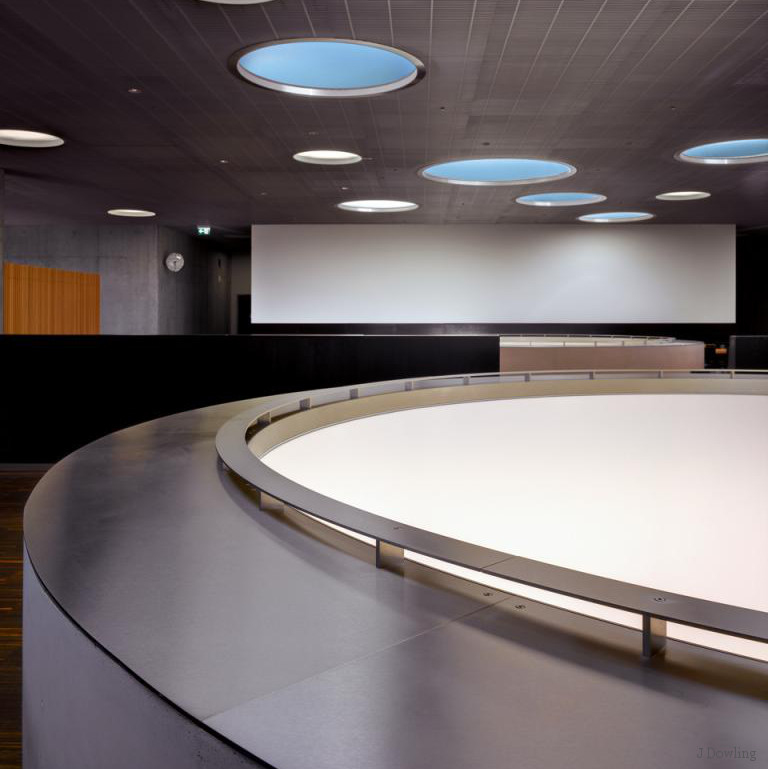
As well as having almost all glass walls, the interior of the building is also flooded with natural light by virtue of ‘light wells’ situated throughout the central area. Reaching from the roof to the ground floor; like lamps, these overlapping wells bring natural daylight to the centre of the common areas. Their layout is reminiscent of the gear trains of a watch, a spectacular visual reference to the movement. The materials used – glass, stainless steel, light and dark wood – give a very contemporary feel to the whole interior.
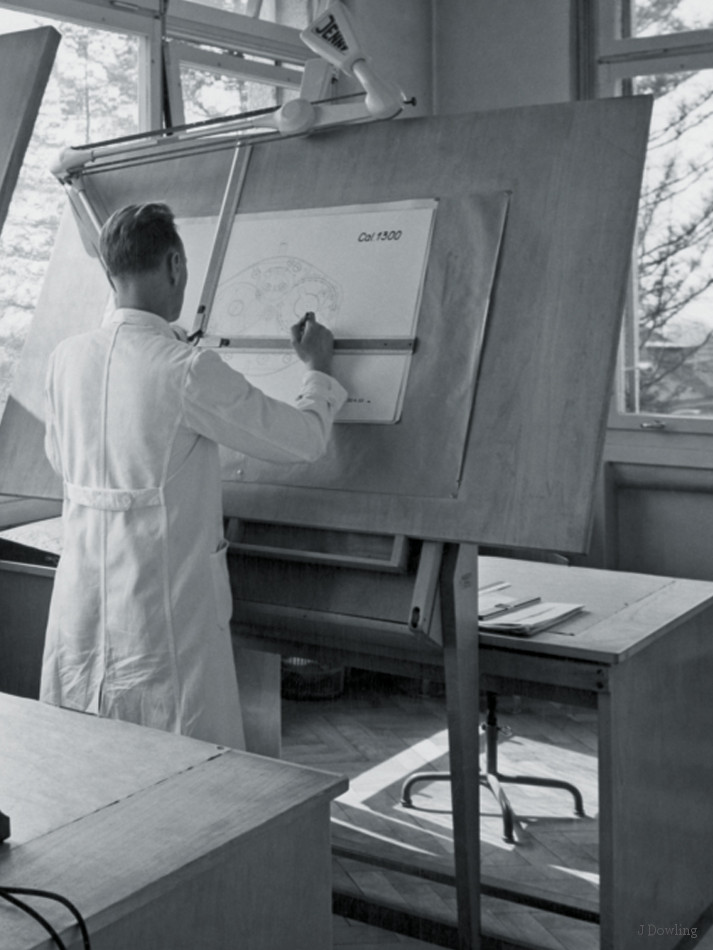
The reason for having so much natural light is that not only does it cut down on the need for artificial light and energy but it is so much better to work under, and it is for this reason that watch ateliers were always on the top floor of buildings and if we look at images of Bienne in the 1960s, we see that even then, as much work as possible was done in under natural light.
What seems amazing, if you think about it, is that this giant complex is devoted to the production of only four different movements; the Rolex 22XX series, as found in the ladies’ and mid size watches; the 31XX series found in the gents’ watches; the 41XX Daytona movement, also used in the YM II and the new 90XX calibre used, so far, only in the new Sky Dweller. However, when you realise that they don’t just make the movement blanks and bridges here, but they even make the jewels, the shock protection and even the lubricants used in the watch right here in Bienne, you realise just how monumental the operation needs to be.
Bienne currently employs around 2,000 people, around a third of the firm’s total Swiss staff, with the rest at the three Geneva factories and head office. These new facilities are designed so that they can be doubled in size should the need arise; meaning that after more than a century on one site in Bienne, Rolex are set for their second century in the town in their new complex.

Tuesday, 6 March 2012

Pre Basel Bombshell; Citizen buys Swiss Watchmaking Group

Hello All;

Citizen, by one measure, the world's biggest watchmaking company today announced the purchase of Prothor. 

Yes, I know that you have never heard of Prothor, but you might well have heard of the firms owned by Prothor; La Joux Perret a movement manufacturer, Prototec, a components maker and Arnold & Son a high end watch brand. 

In their submission to the Tokyo Stock Exchange, Citizen said that they paid 64.6 million Swiss Francs for the company. 

The plans are two fold, there is now a possibility for Citizen to produce 'Swiss Made' watches and there is potential for Porotec to become a full fledged competitor to the Swatch Group's ETA as Porotec will now have access to Citizen's hairspring manufacturing technology. 

This is major news, by any measure. I plan to speak to someone at Citizen on Wednesday & will pass on any information I can obtain.


The above are the few facts as known at this moment; here is some wild and utterly unverified speculation; 
1 Citizen were upset when the rules of the 2009 chronometry competition were announced and they saw that Asian manufacturers were excluded. Unlike Seiko who won major prizes in the mid 1960s, Citizen have never entered the Swiss chronometer competitions and they saw their new mechanical 'The Citizen' watch as their chance to garner some laurels. By buying a Swiss company, they can then make the watch in Switzerland and then enter it.


2 The three largest hairspring manufacturers in the world are the Nivarox/FAR division of ETA, Citizen and Seiko. Should Citizen transfer some of their hairspring manufacturing technology to their new Swiss subsidiary along with Swiss production of their Miyota movements; they have the POTENTIAL to become the first ever real competition to ETA. Sure, lots of people from DeBethune to Rolex are making their own hairsprings nowadays, but they are almost all used in house. To the best of my knowledge, there is no-one producing them on a large scale for sale. If Citizen start to produce them in Switzerland, it will genuinely be a game changer.


Please feel free to comment & I will update this with any information I get at Basel in the next few days.

Monday, 5 September 2011

Doing it right at Roger Dubuis


In August I had the pleasure of spending a few days at the Roger Dubuis factory and had essentially unfettered access to the place and the staff. 

If we are honest, RD have previously been known for three things: phenomenally designed movements, over the top case & dial designs and a reliability record only rivalled by the TU 144 'Konkordski'.

The new management are truly determined to change the final point, but you hear these sort of things from PR people all the time, so I learn to take them with the proverbial grain of salt. 

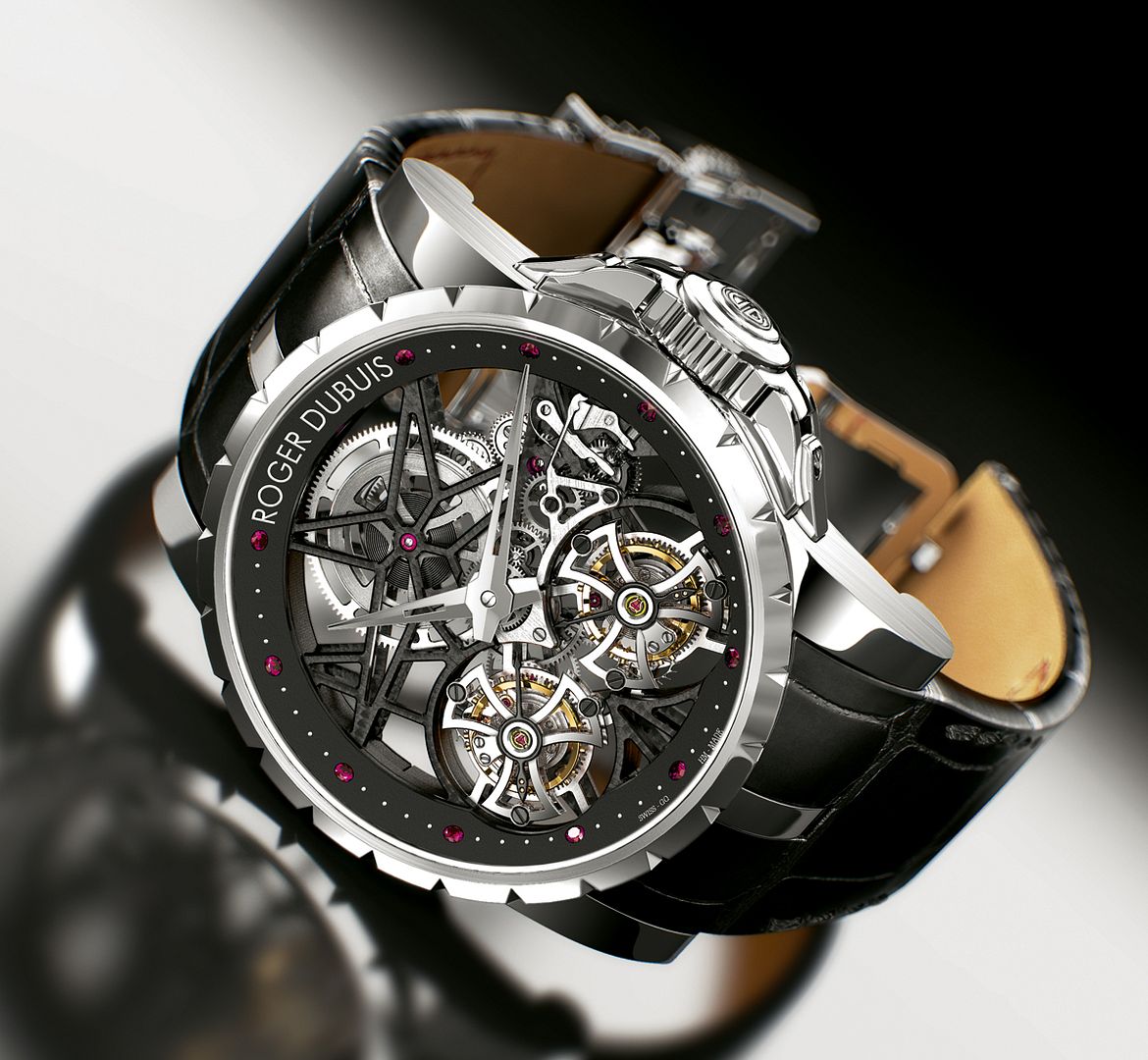
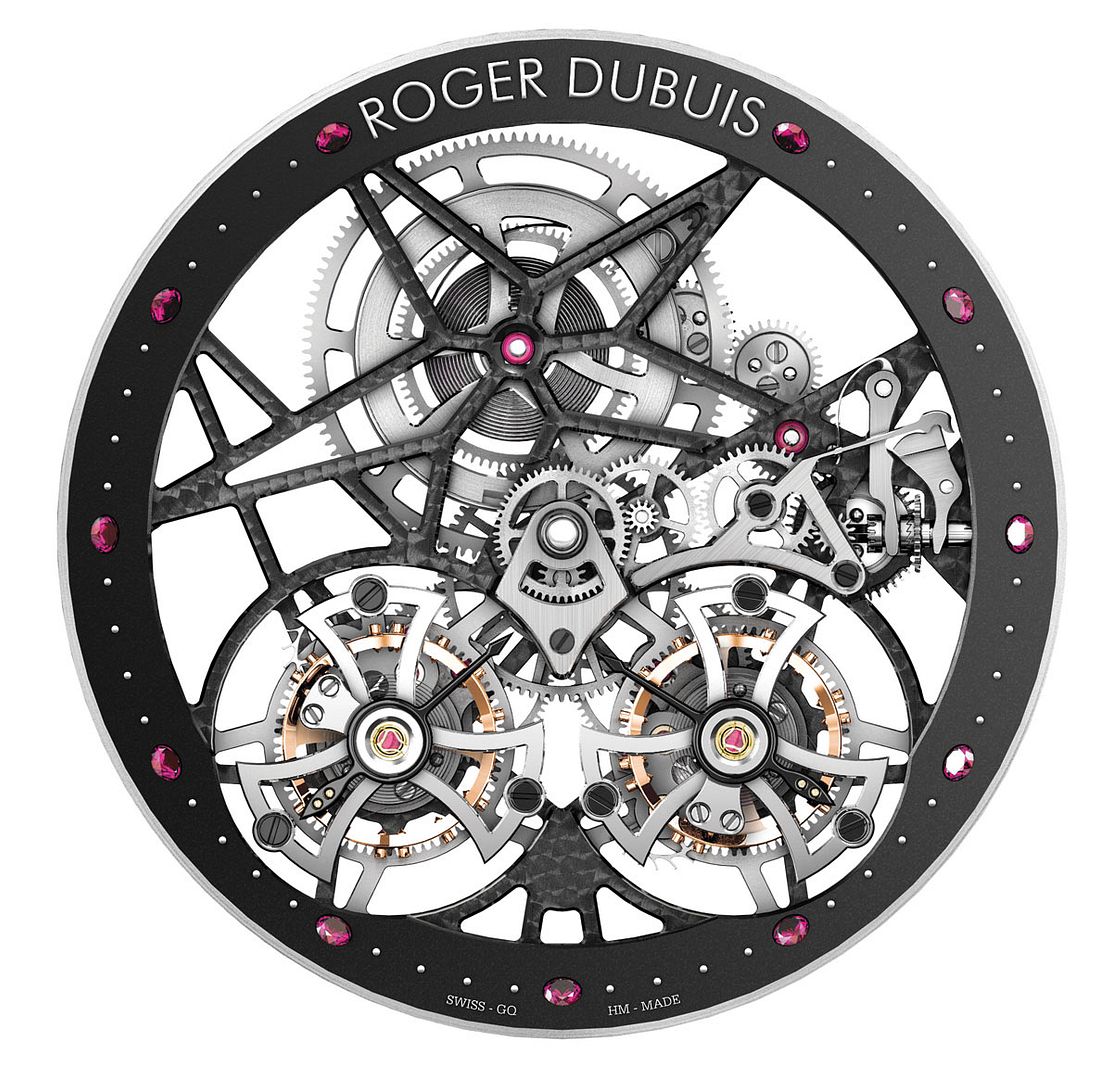
Probably the most complex movement that Roger Dubuis make is the RD 01, a double flying tourbillon with 319 parts. 


In parallel with developing the brand new movement for the new Monagasque line 


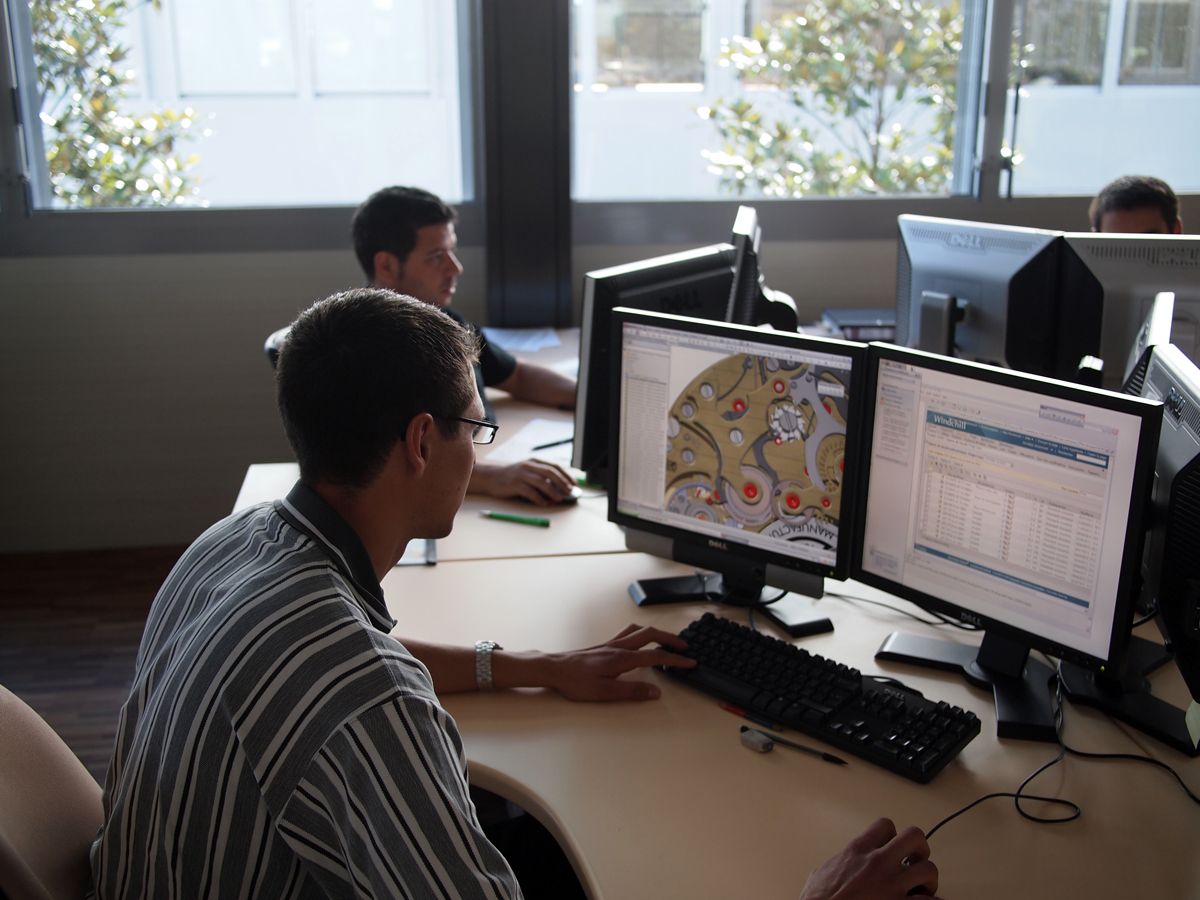
their design department also undertook a detailed analysis of all the current movements. 


In the course of this analysis, they diagnosed several inherent areas in the RD 01 movement which could prove to be problematic. So, they redesigned the movement; this wasn't just a quick fix, it involved redesigning 32 individual components, including the main plate and changing the watch from having the two tourbillons rotating in opposite directions to having them move in the same one. 

That was a good idea, redesigning the movement so that it was less likely to present problems down the line. But it was what they did next that signaled that the firm were truly committed to quality. They then contacted all their distributors and asked them to return any watches still in stock and they retro fitted them with the new movements and returned them. Then they went to the retailers and asked them to send back any watches they had and finally, they had the retailers contact all the original owners of the watches, and they were all brought back to the factory, no matter if they were out of warranty, and brought right up to date. 

In all, around 100 watches were revised, not exactly an insignificant operation. I don't know if any other firm has done this, but I have to say it certainly shows a commitment to quality I haven't previously encountered.

Monday, 8 August 2011

Some thoughts on the Changing of the Guard at Rolex


Recently the abrupt departure of the CEO of Rolex, Bruno Meier, after a short time running the firm, caused some consternation in the Blogosphere, however (as normal) I choose to disagree.

I believe that the big news is not the departure of Mr. Meier after such a short period at the helm, neither is it the arrival of his replacement, Mr. Marini (until recently, the head of Rolex Italy); rather it is the creation of a new post; that of Head of Overseas Sales.

The new job will be taken by Daniel Neidhart (until recently based in HK, where he ran the China market for the firm); what is important is that Mr. Marini is 64 years old, and therefore unlikely to be in the job for long, whilst Mr. Neidhart is a stripling of 48. Mr. Neidhart was born in Hong Kong & will now move to Geneva, insiders see this move as the appointment of heir apparent.

In probably his best play "The Importance of Being Ernest", WIlde has Lady Bracknell say "To lose one parent, Mr Worthing, may be regarded as a misfortune; to lose both looks like carelessness."

Pretty much what you could say about Rolex right now; for a company who prided themselves on having only three CEOs in 103 years, to lose two CEOs in a couple of years seems to be almost anarchic.

What is important is that the changes indicate a reversion to type at Rolex; historically the CEO has been a lifetime Rolex person & (crucially, in my opinion) has come from the marketing side of the company. Whilst some might like to think of Hans Wilsdorf as an inventor or watchmaker, he was neither, in all his official documents Wilsdorf described himself as a "Merchant"; the nearest word in his days to what we would now call a Marketer. His successor Andre Heiniger, although trained as a lawyer, spent most of his early life as the head of sales for Rolex South America. During the dark days of WWII, South America was the only profitable area for Rolex (and other Swiss watch companies), being both peaceful & working flat out to supply the combatants with raw materials.

Andre's son, Patrick, who succeeded him; was a major marketer who will be remembered for his far sighted ideas of linking Rolex in with major sporting events but whose lasting legacy will be his decision to consolidate the 27 factories around Geneva into three huge plants and in so doing, become almost 100% self sufficient.

What joined all three was that they were all lifetime Rolex marketing guys, and so steeped in the culture & ideology of the company.

Bruno Meier, was a banker by training & spent almost all his life working in that field, his appointment as Finance Director at Rolex lasted only three years until he was promoted to CEO. The two new guys at the top of the company are both long time Rolex employees and, interestingly, both marketers. In essence, what we are seeing at Rolex is a reversion to type, with one marketer with 40 years experience at the company being brought in as a 'safe pair of hands' to smooth the transition to younger guy who can be expected to be at the helm of the firm for a decade or more.

Tuesday, 2 August 2011

Major changes at Roger Dubuis

Next week I am spending a few days at the Roger Dubuis atelier near Geneva airport; so, before I write the report on that visit, I thought that you might like to read this piece I wrote about the major changes at the company earlier this year.


If this year's SIHH salon was characterized by any one thing, it was conservatism, most brands played it very, very safe.


But one brand stood apart from all this conservatism and introduced a whole new line and a brand new complicated movement; this was Roger Dubuis, a brand with whom I have had a long complicated relationship. Let me explain, I have long held that their movements are some of the most interesting, stunningly designed and beautifully finished being made in any factory in Switzerland. Have a look at these: 


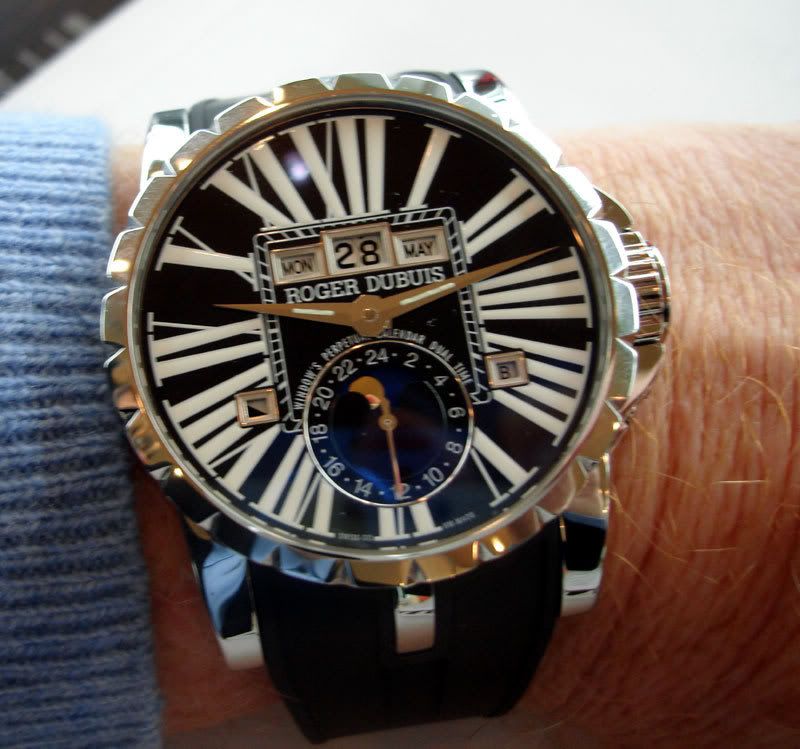
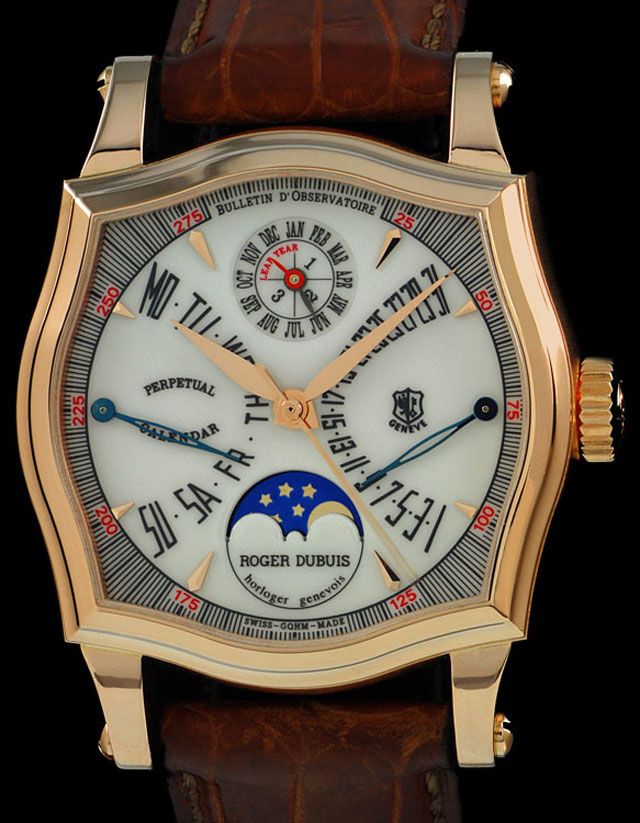
Let’s be honest here, if you wanted a perpetual calendar, wouldn’t this be the perfect way of displaying the day, date & month? 


You might not like the rest of the dial (and I don’t) but isn’t that the perfect perpetual calendar display, how come no-one else does it & no-one has done it since Patek did a few pocket watches with that display, but even they haven’t made one in over 50 years and they never made a wristwatch version. 

But before we look at what is happening with Roger Dubuis now, it is important to understand the short history of the firm. Roger Dubuis (who was a real person); like Laurent Ferrier, Peter Speke-Marin and F-P Journe worked for many years restoring classic wrist & pocket watches from the great names & built up a reputation as one of the finest watchmakers of his generation. 
In the early 1990s he set out on his own and with some investors built a brand new factory near Geneva airport and in 1995 began to produce the first watches to bear his own name. The factory was the first brand new one to be built in Geneva since the ‘quartz crash’ of the 1970s and was equipped with the latest equipment; spark & wire erosion machines and the newest CNC borers and lathes. The great advantage of this equipment is that it is inherently very flexible and the new firm took advantage of this flexibility to do something no-one else had ever done, they announced that ALL their watches would be limited editions, with precious metal watches in runs of just 28 units for each metal. The number chosen ended in 8, because it was considered a lucky number in Chinese numerology. 

The limited edition idea was brilliant, but in implementing it, the firm built a rod for their own backs. If you only make a few dozen of a piece, it isn’t enough to allow all the problems to be worked out and the firm developed a reputation as a company with exciting designs but very bad reliability. The initial watches were amazingly complex; this early perpetual calendar from RD was one of the first watches to use double retrograde indication and was housed in their signature case design, known as ‘Sympathie’. It was a combination of cushion & round shapes and utilised one of the most complex sapphire crystals of its time. 


Not long after the company ramped up to full production, M. Dubuis left the company, the circumstances of his departure are not known, but after his departure two things happened; firstly the company began to launch much more extreme case and dial designs and the service problems became even more prevalent. The introduction of new models & movements increased at an exponential rate, resulting in the introduction of 30 new movements in the first 15 years of the firm’s existence, most of these movements were complicated ones, ranging from split second chronographs to the world’s first watch with twin tourbillons. For comparison, this was during the time when the long established (and much larger) Patek Philippe had introduced less than a quarter of that number of new movements. 

Not only was the company introducing new models and movements at a ferocious rate, the firm also became increasingly embroiled in litigation; it was involved in lawsuits filed by everyone from its US distributor to the minority shareholder, all the while trying to placate the Swiss Bank Credit Suisse who held a mortgage on the factory and who was becoming increasingly uncomfortable with the potential of its investment. This period of conflict came to a head in October 2006, when what I call ‘The war of the Press Releases’ began; like most watch writers outside Switzerland I knew nothing about this until I got a press release from RD in my inbox on the afternoon of 2nd October, this release stated that the firm “...would like to make a formal denial of the rumours that a large Group, active in the watch domain, has recently acquired his company. 
This information, which is totally unfounded, is particularly inopportune, coming at a time when, backed by an extremely effective industrial infrastructure, the ROGER DUBUIS Manufacture is completely independent, designing, developing and manufacturing all the components of its own movements, including the regulating organ (the sprung balance). 
Finally, the numerous development projects currently under way, most notably the increase in production, testify to the growing demand of international markets and the Brand’s excellent prospects for the future.” 

What this release did was to alert those of us outside Switzerland that there were some problems at RD and so I began to keep a closer eye on the firm & this was rewarded the following year when on 5th March I received another bizarre press release from the company. This lengthy document denied a report published earlier that day, in the Swiss business publication ‘L Aegifi’, the release made public to a much wider audience just how deep the rift within the company had become and that there were several legal matters still outstanding. 

Less than a year after I got the release categorically denying “the rumours that a large Group, active in the watch domain, has recently acquired his company”; I received one from Richemont stating that they had acquired the manufacturing facility of Roger Dubuis. They took over the factory, the machines and most of the employees; as part of the deal, RD & Richemont signed an agreement that RD watches would still be made in the factory and that RD would design, distribute & service these watches. But anyone who could read between the lines could see that the days of an independent Roger Dubuis company were numbered; and so it came to pass that on the 11th of August that Richemont took over RD totally. 

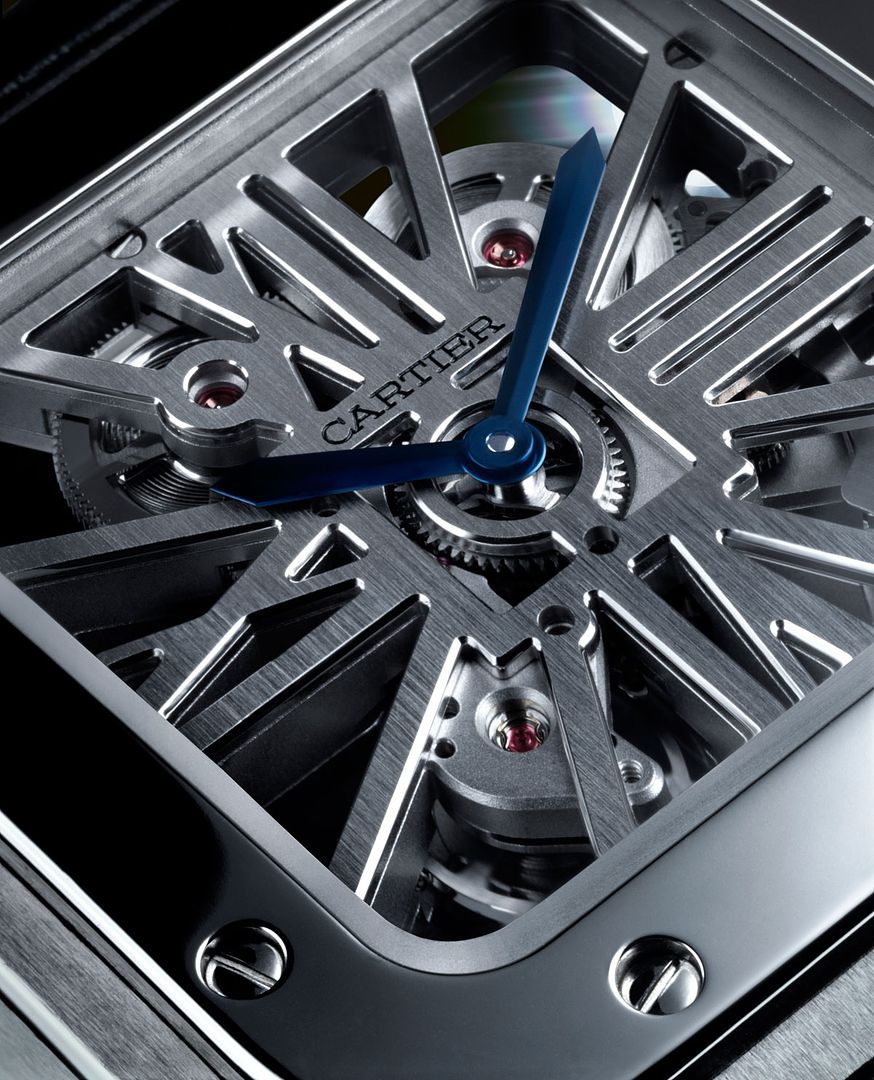
The question that we all asked was ‘Why?’; in many ways, Richemont had bought a ‘poisoned chalice’; the firm’s reputation was in tatters, it was engaged in legal turmoil on two continents and as the world’s economies staggered in the wake of the failure of Lehmann Brothers, the market for expensive ostentatious watches (which was all the firm made) shrank quicker than any other. The smart money assumed that what Richemont wanted was the factory, its equipment and its staff; of all the watch factories in Switzerland, the RD one was probably the best equipped and most modern after Greubel Forsey and Renaud et Papi, but unlike those two it had the great advantage of being based in the canton of Geneva, enabling its movements to qualify for the coveted ‘Geneva Seal’ certification. The smart money seemed to be proved right when Cartier (without a doubt Richemont’s most important brand) introduced its first watch with the Geneva Seal at the SIHH in March 2008. At the following year’s SIHH Cartier launched several watches with the seal, meaning that they were made at the Meyrin factory, particularly notable was the Santos skeleton which quite evidently drew on RD’s massive experience with skeletonised plate design. 


Most observers looked at the new Geneva Seal Cartier watches being introduced and compared that to the paucity of introductions by RD at the 2009 SIHH and made the assumption that RD was on its way out. But Richemont seemed to not be one of those, and towards the end of 2010, made two important appointments to the firm; firstly it was announced that Georges Kern was taking on the position of CEO on 1st October, Kern is currently head of IWC and seen as one of the heirs apparent to take over the helm of Richemont, so this appointment was seen as Richemont’s affirmation that it had faith in the long term future of the brand. The second appointment was perhaps more extraordinary, within weeks of Kern’s joining RD the firm announced that Dominique Tadion was coming on board as Director of Communications. The role of ‘PR Girl’ is often thought of as someone only peripherally involved in the horological industry; but that cannot be said of Ms. Tadion, she was a dominant force in her field during her 15 year career heading the communication department at Rolex. 

What these two appointments said to me was that Richemont was not only not giving up on RD; rather that they were prepared to commit serious resources into rebuilding the brand, this theory gained traction when just before the end of last year I heard that RD would be launching an entirely new movement aimed at a more affordable price point. 

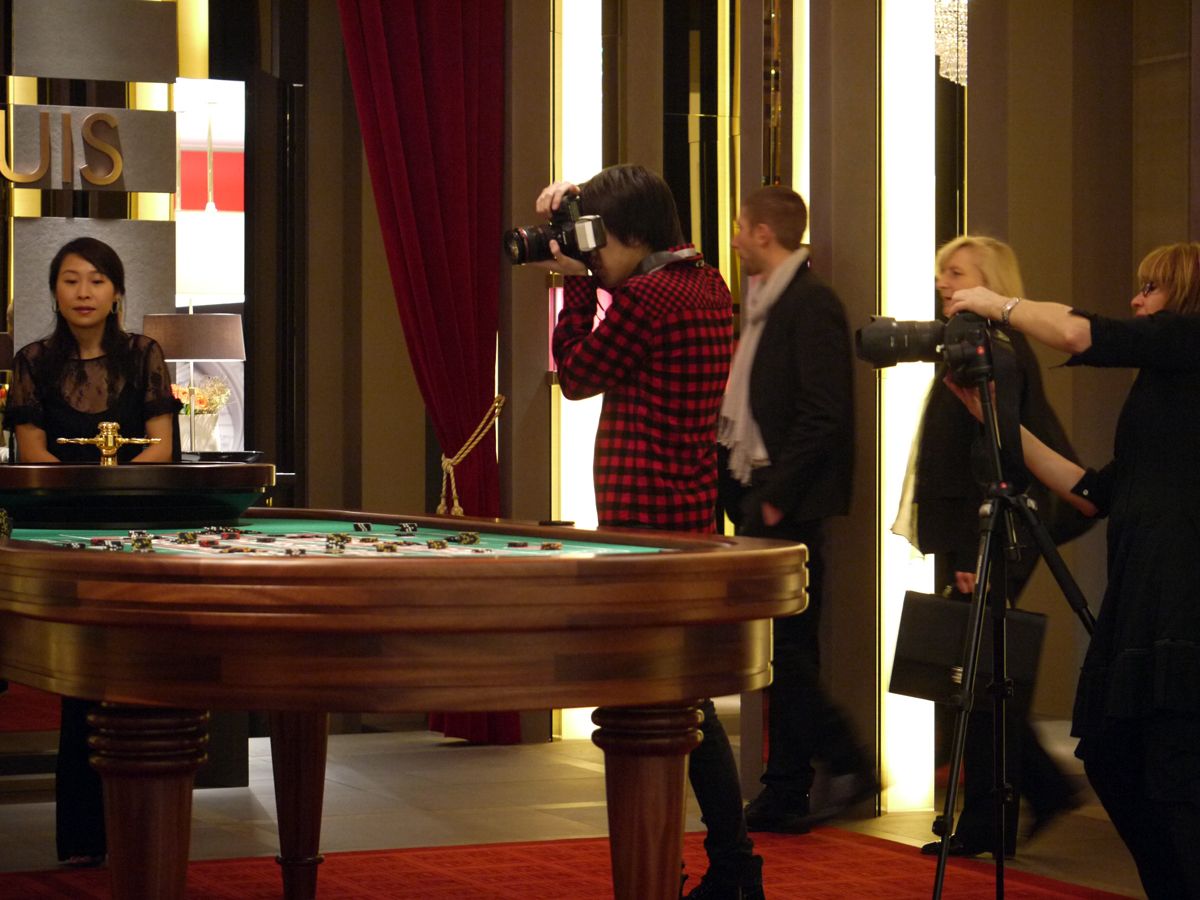
So, it was with my curiosity truly piqued that I walked into the RD press briefing first thing on Tuesday morning. Interestingly the place was laid out like a casino, with a large Roulette table dominating the space. 


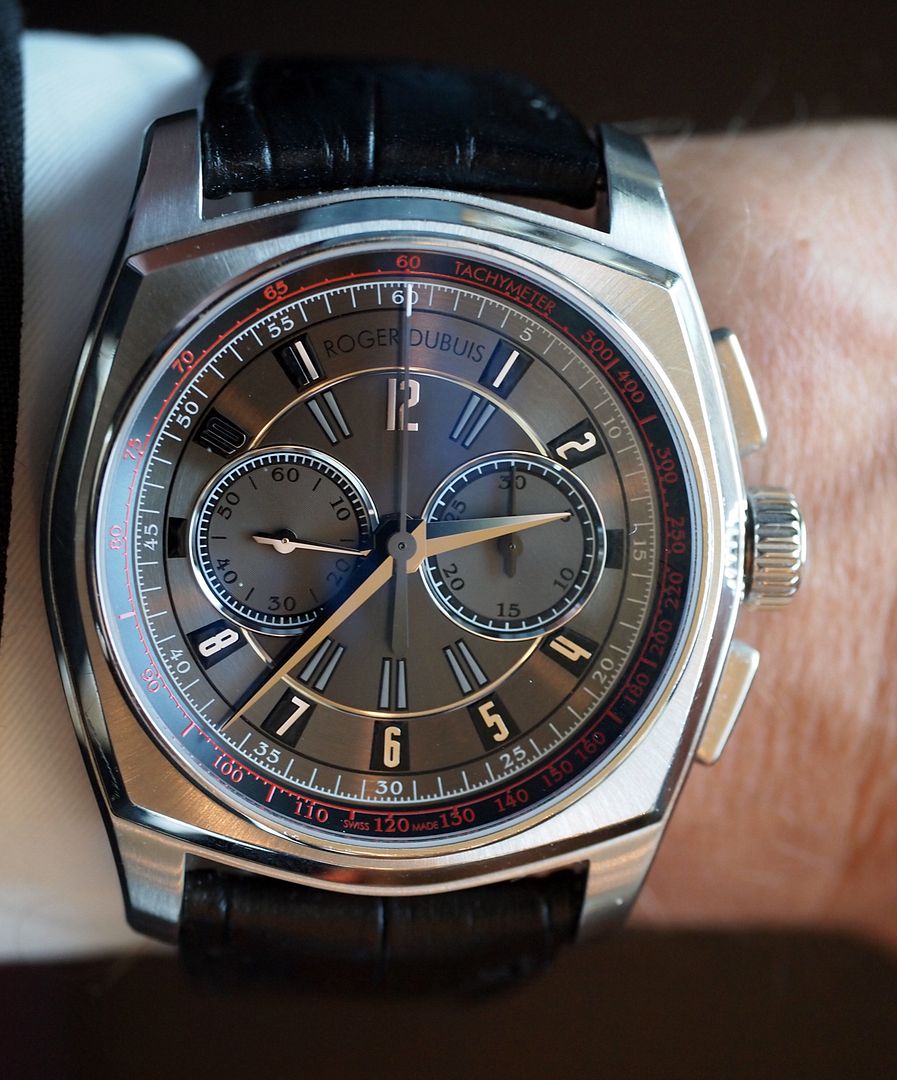
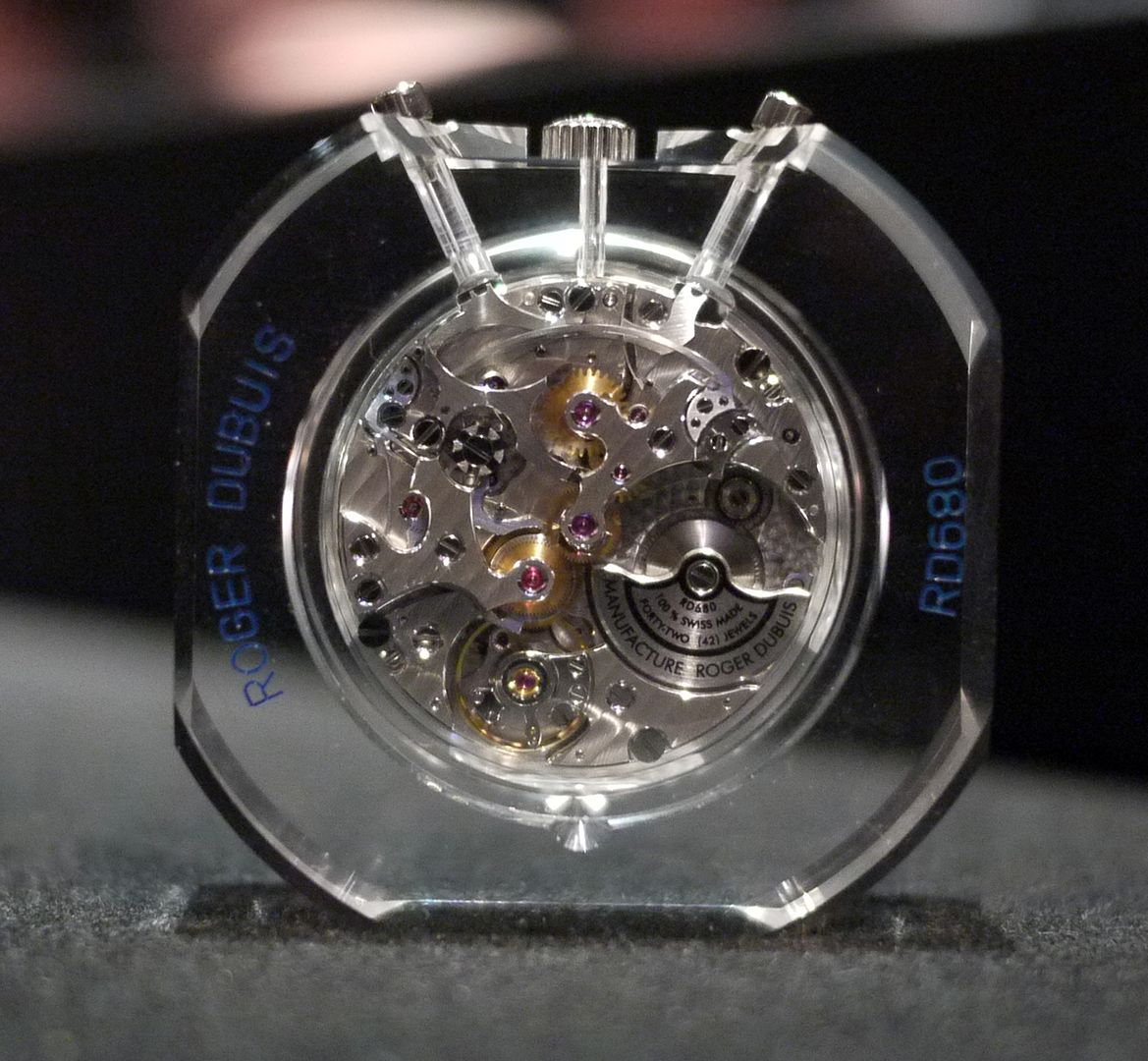
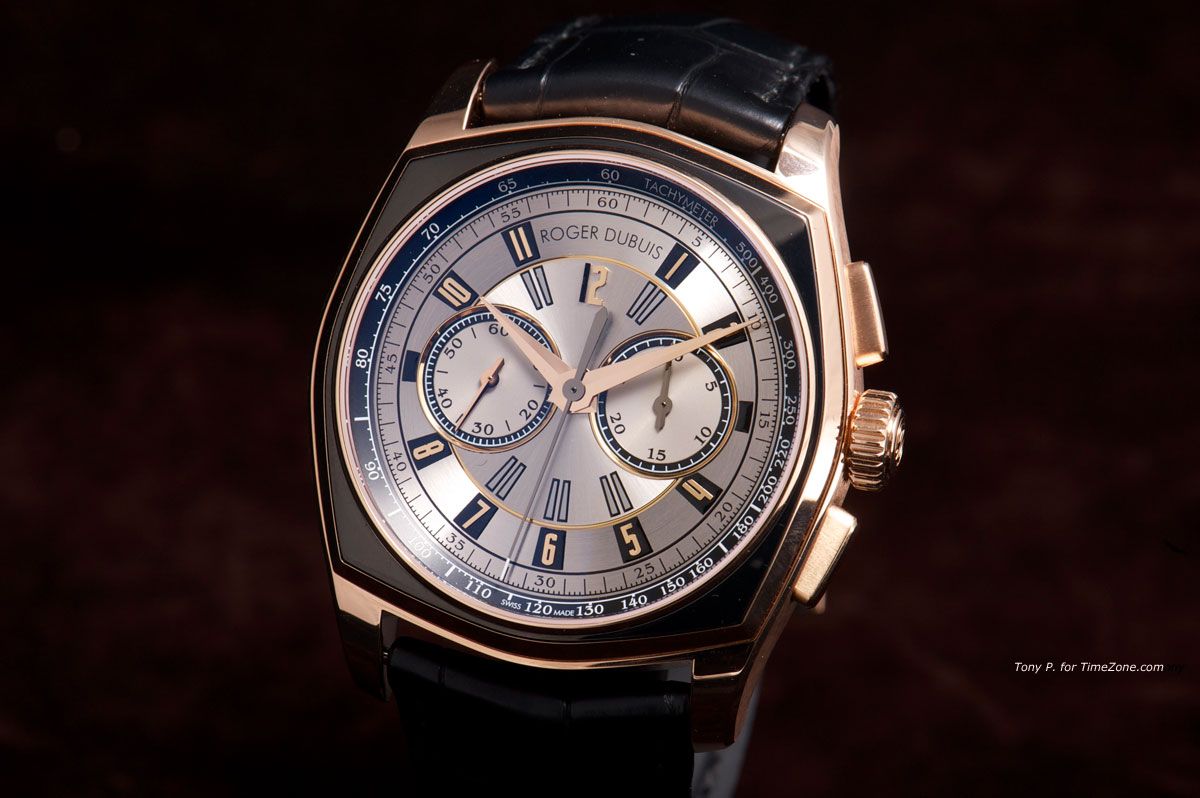
The rumours of a new movement were confirmed within minutes of the presentation starting, called the RD 680, this new movement signalled a return to the values and designs of the company when M. Dubuis was involved. The automatic chronograph movement with microrotor was (for an RD movement) quite conservative, with no skeletonising, 30 minute register only, classic column wheel operation, 30mm diameter, 5.6mm high, 28,800 bph and with a 50 hour power reserve. 


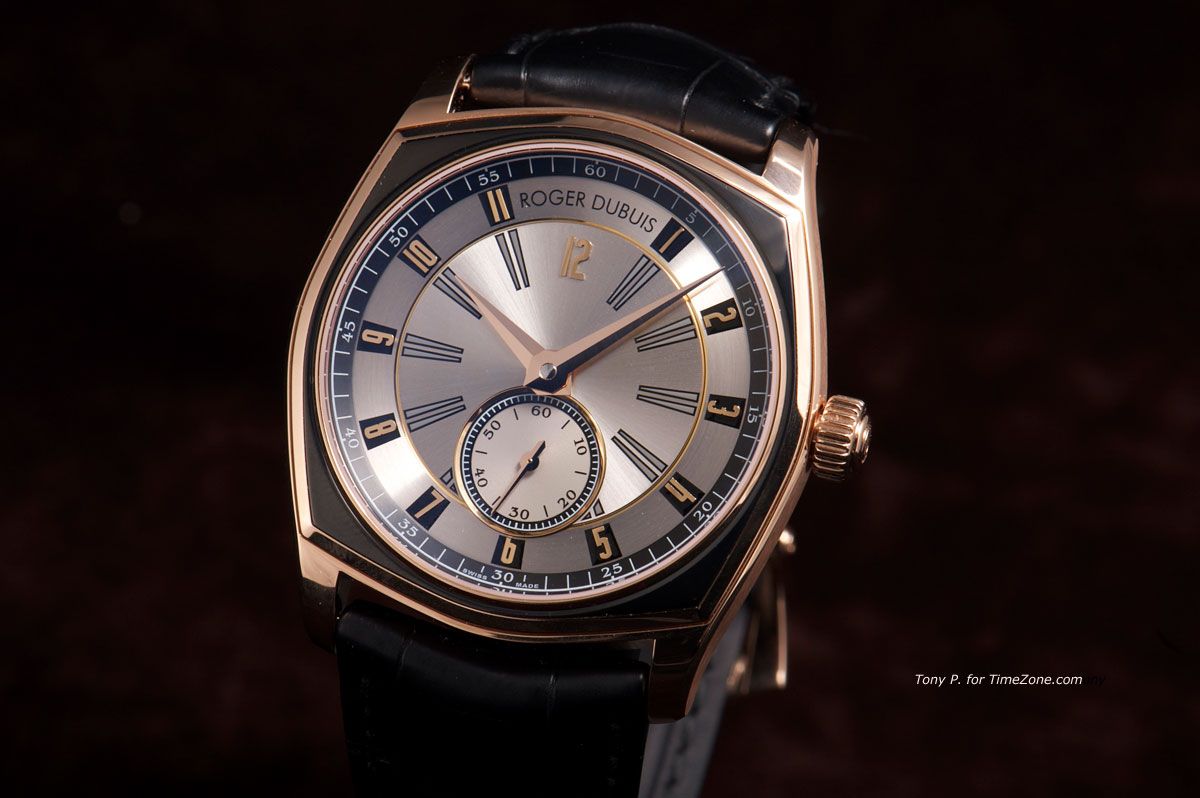
It was housed in a case called the ‘Monegasque’, although those who have followed the brand will know it as a simplified version of the original ‘Sympathie’ case. 


I used the word ‘conservative’ above to describe the movement, the same word could also be used to describe the watch, and it could well be the least flamboyant watch ever to come out of the factory, even down to the size, it is a normal sized 42mm case with the standard 2 lug strap fitting. 

Earlier in this piece I have written a lot about the quality control problems that the firm has faced, I did so because the presentation also talked about these self same problems and what the firm has now done to solve them. Like an alcoholic; if you want to be cured, the first step is to admit that there is a problem; at the presentation RD did this and went on to explain the three step programme that all their watches will now go through. I mentioned earlier that all RD movements qualified for the Geneva Seal, but this only covers the location where they are made and the levels of hand-finishing but not timekeeping nor quality control. This is where RD have been smart, they have outsourced the entire verification and final QC processes, the watches now go to an independent organisation called Timelab set up by the Canton of Geneva where watches are checked for Geneva Seal qualification, timed to see if they meet COSC standards and inspected for quality control issues; all of these tests are under one roof. When the testing is complete, Timelab can issue both the Geneva Seal qualifications and the COSC certificates. 


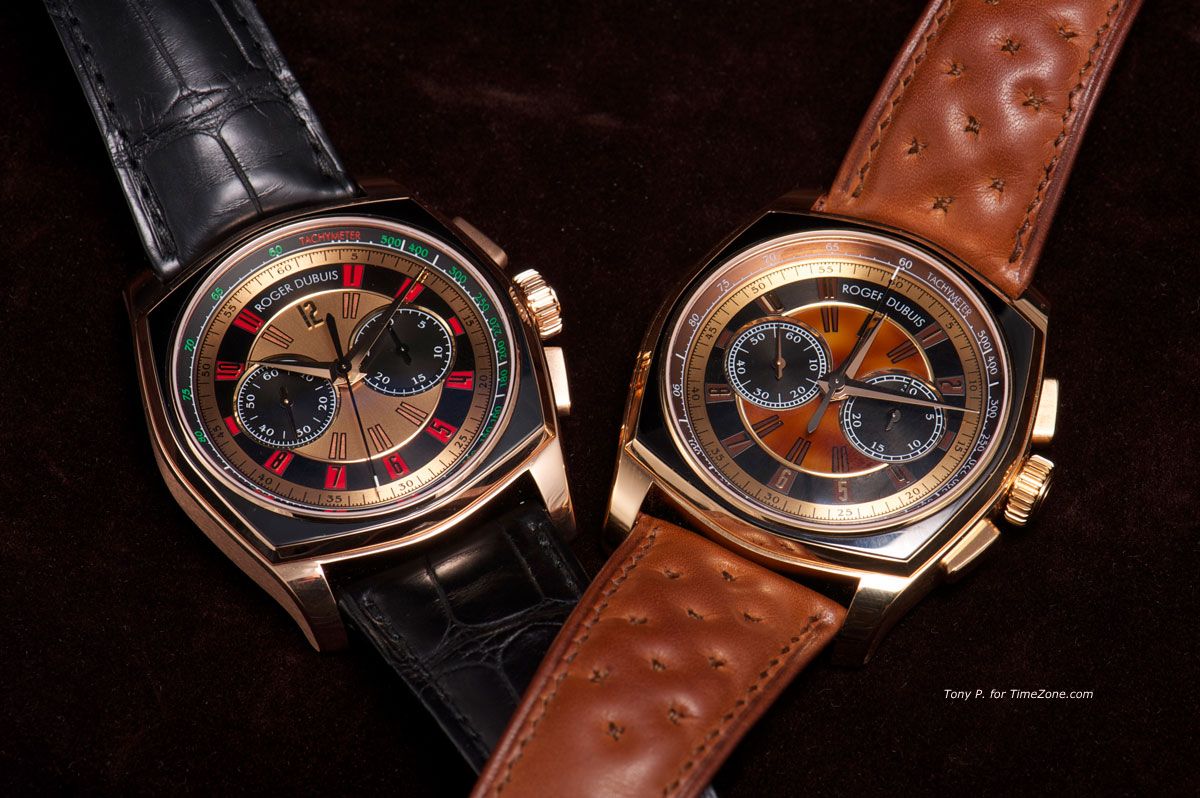
The La Monegasque line will be more than just the chronograph shown above, also in the range will be a limited edition version with a dial which has the appearance of varnished wood, with a most unusual strap and powered by one of the earlier RD chronograph calibres. 


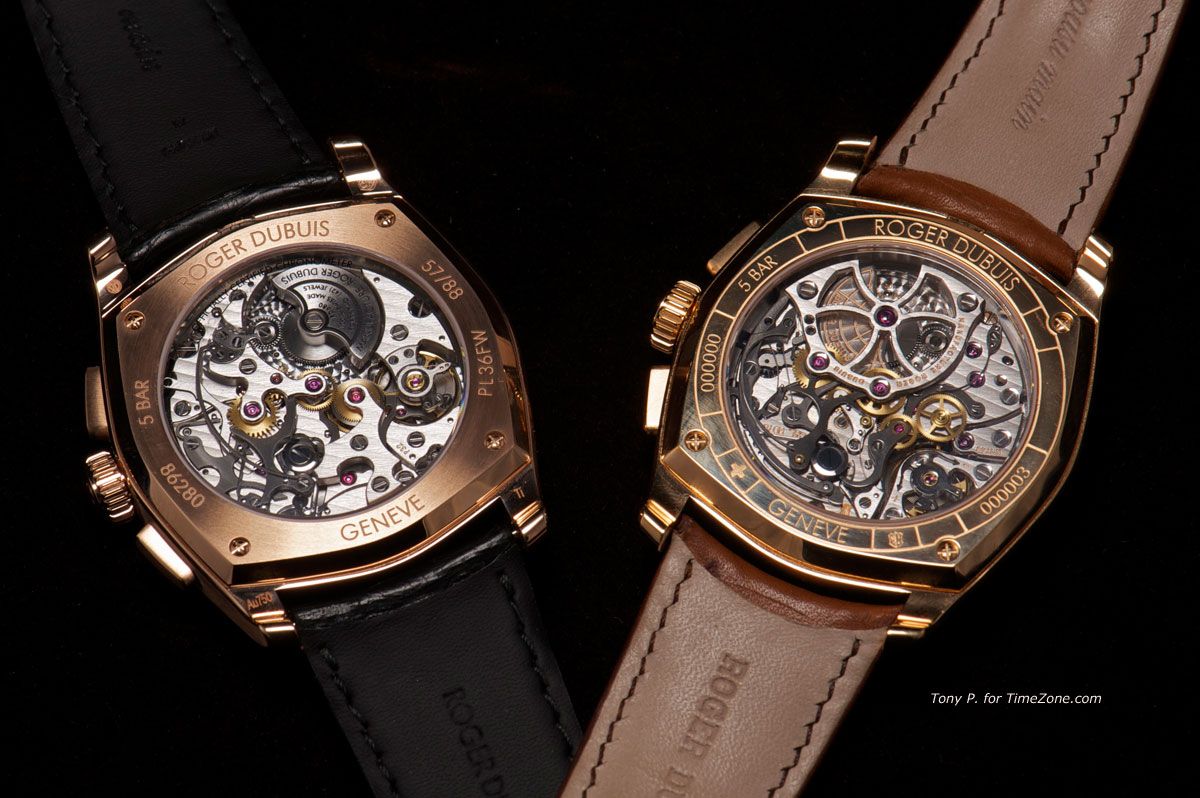
The second image shows the difference between the new movement & the older style RD calibre, the dial shown on the watch on the left is very much inspired by the Roulette table iconography. 

The range is topped & tailed by a simple time only piece, shown below: 


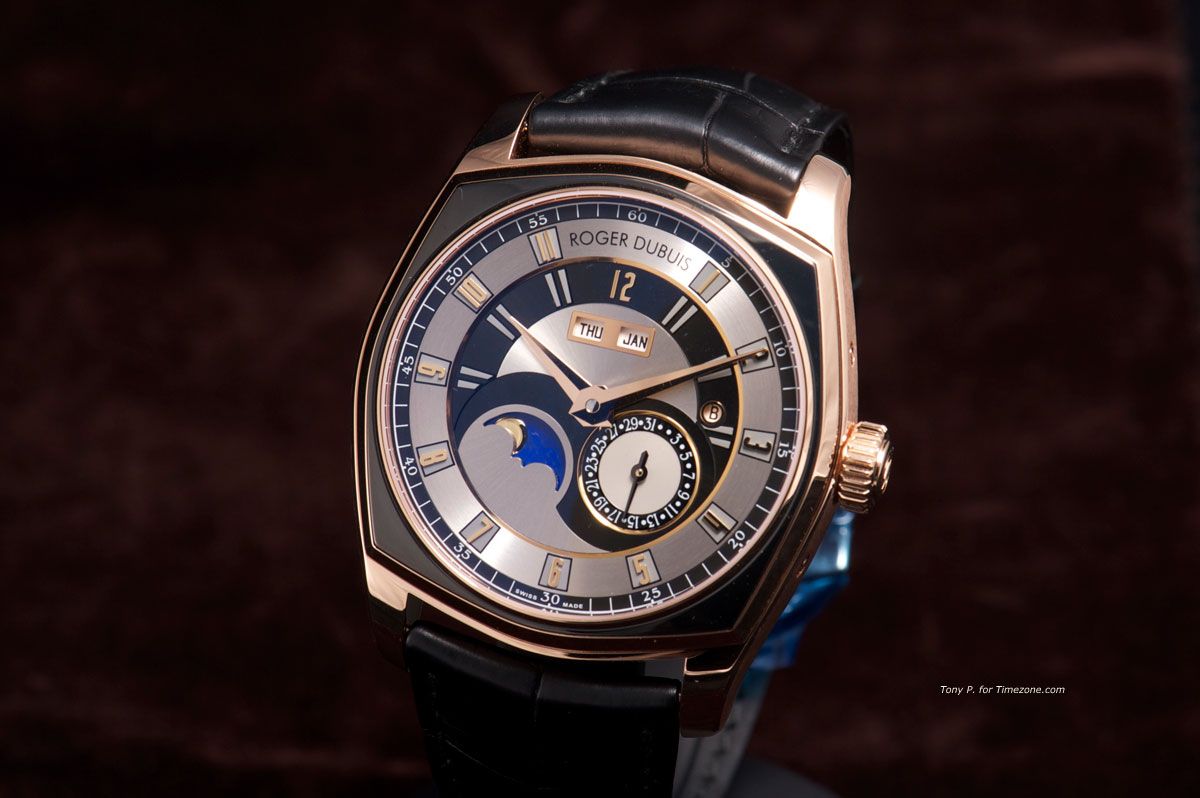
And a gorgeous perpetual calendar with a most unusual dial layout, shown here: 


There are two major shifts from the RD philosophy of old, these will be regular production models, not limited in any way (other than the specific limited editions) and the pricing will be similar to or slightly below other high end brands for watches with similar complications with prices ranging between 24,000 Swiss Francs for the time only watches to 67,000 Swiss Francs for the perpetual calendar. Remembering that the Swiss Franc and the US Dollar are pretty much equivalent nowadays, I consider 67,000 CHF a fair price for a rose gold perpetual calendar with an in house Geneva Seal movement. 

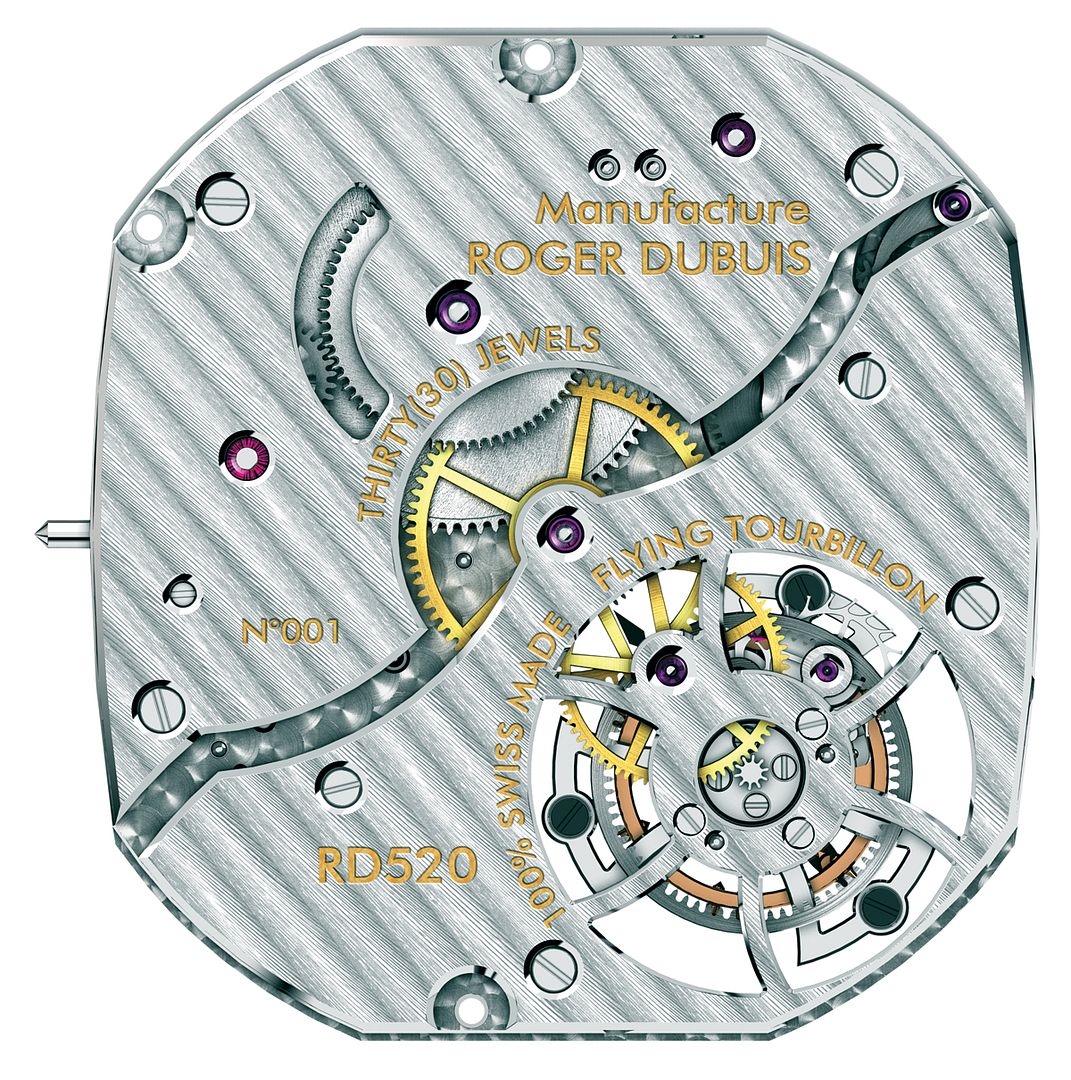
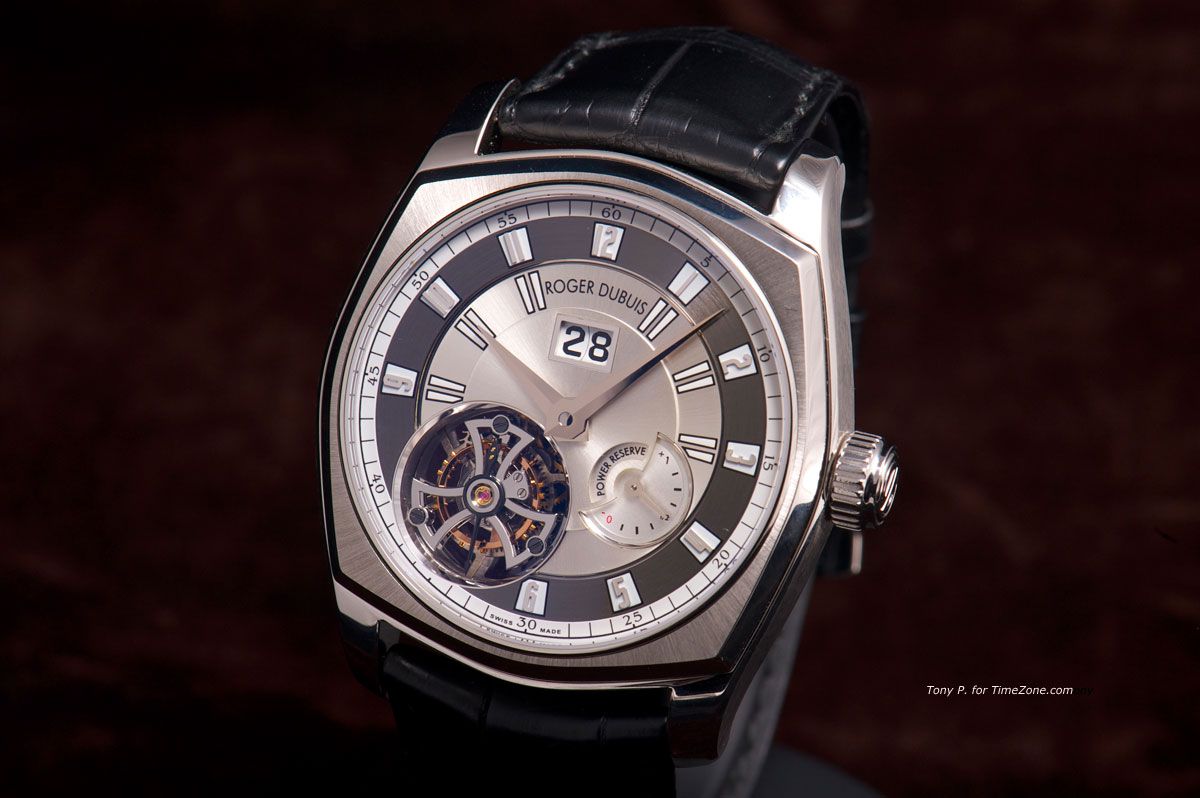
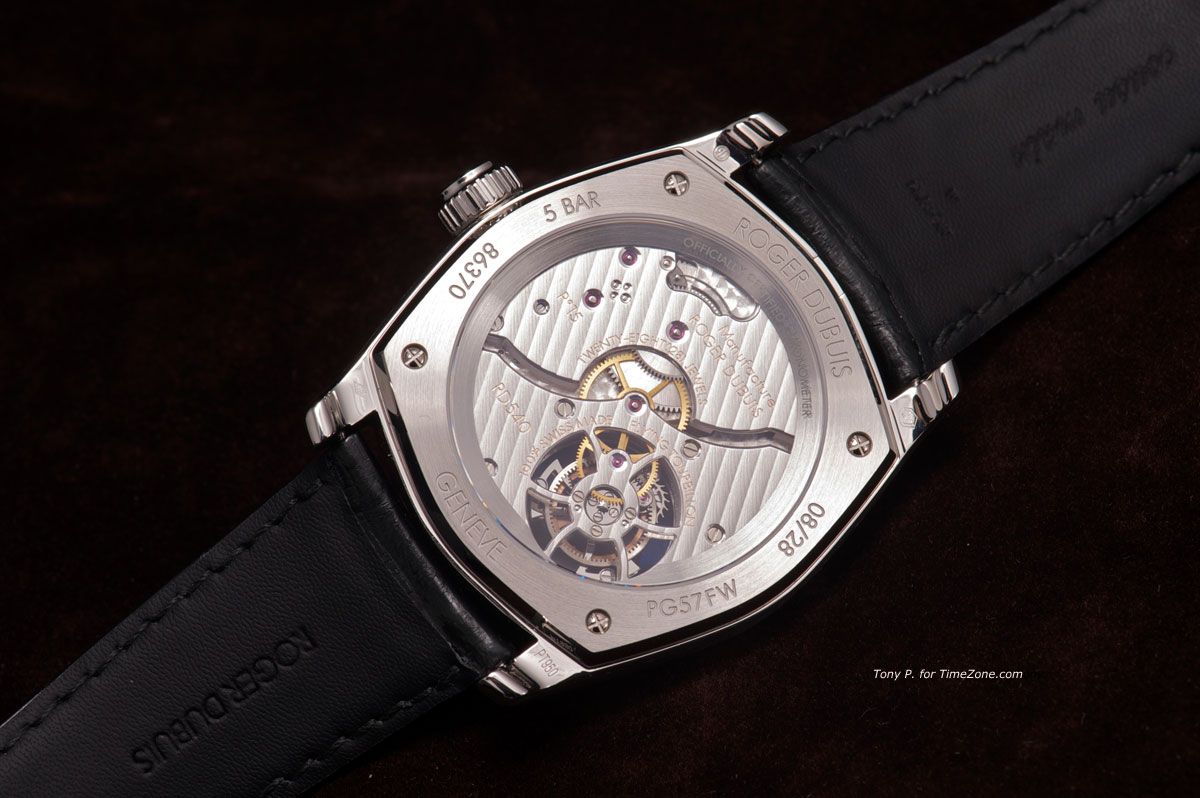
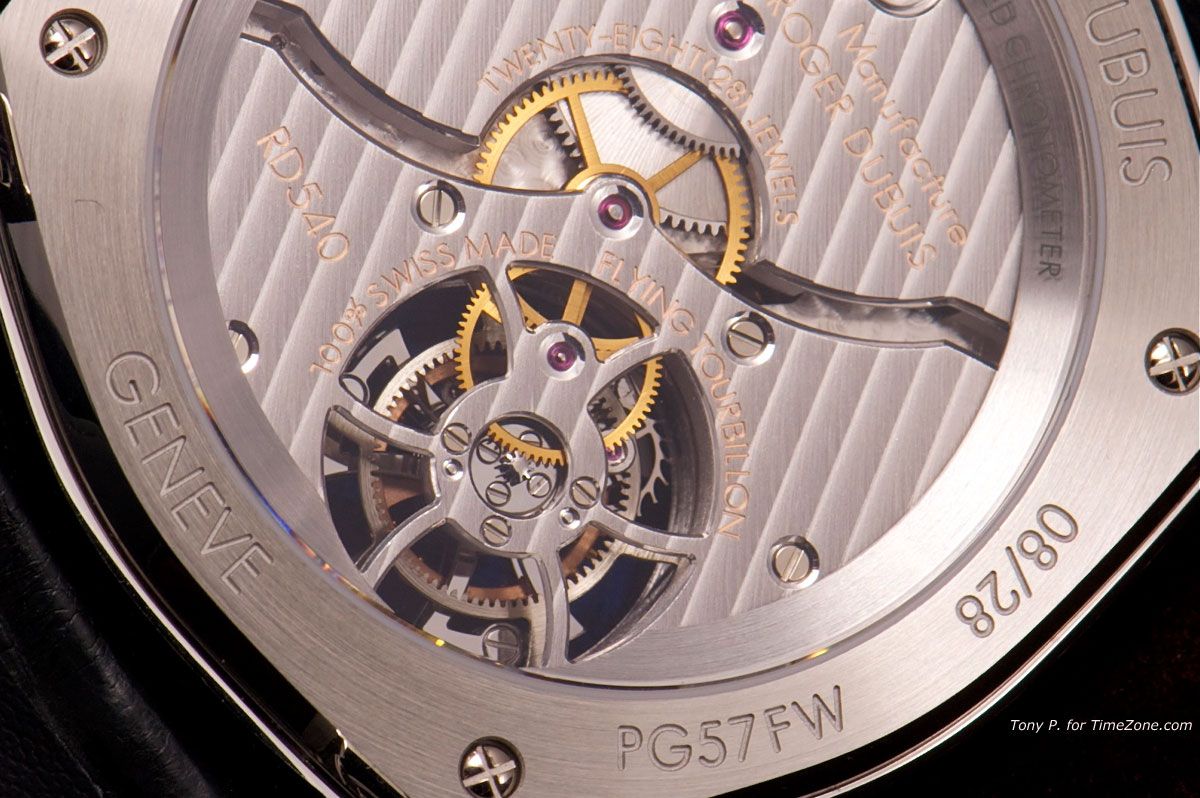
Of course, it wouldn’t be Roger Dubuis if there wasn’t an exotic version, and the other limited edition in the La Monegasque range is this platinum cased flying tourbillion: 


I think that the La Monegasque range has a good chance of reviving the brand, but it all depends on the support of the dealers and I think that when they see the new watches and when they understand that the deep pockets of Richemont are fully committed to the brand, then they will become as enthusiastic as I am. 

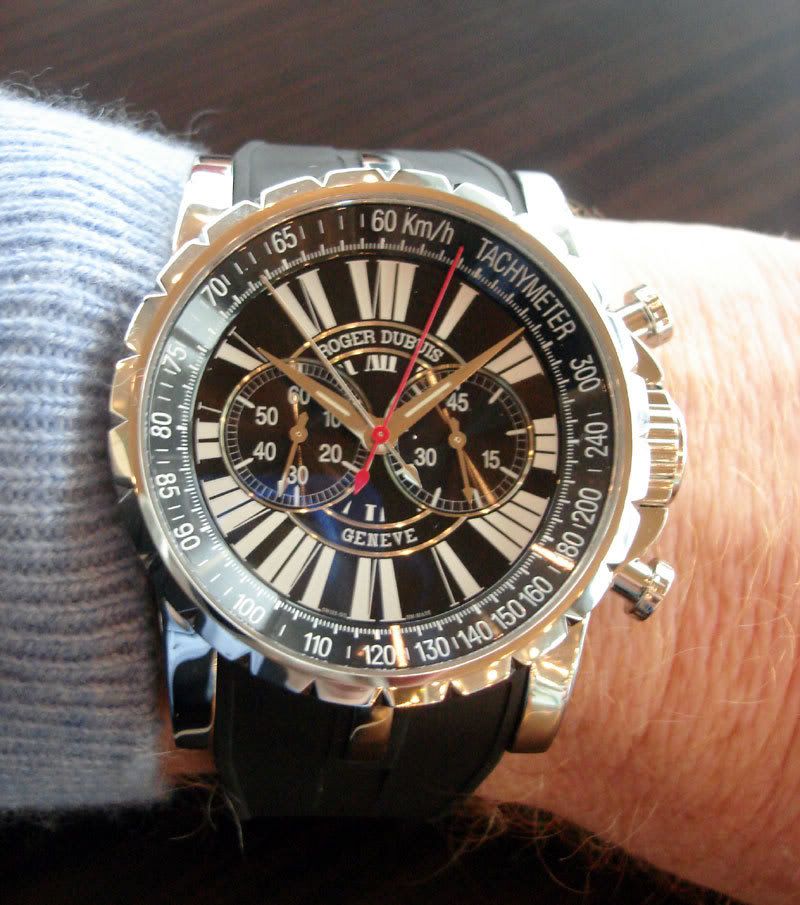
One of the most extravagant signature lines of Roger Dubuis was the Excalibur range, oversized, with exploding roman numerals and a castellated case with triple lugs, it was the basis for many of the firm’s most complicated watches, and here it is housing a split seconds chronograph. 


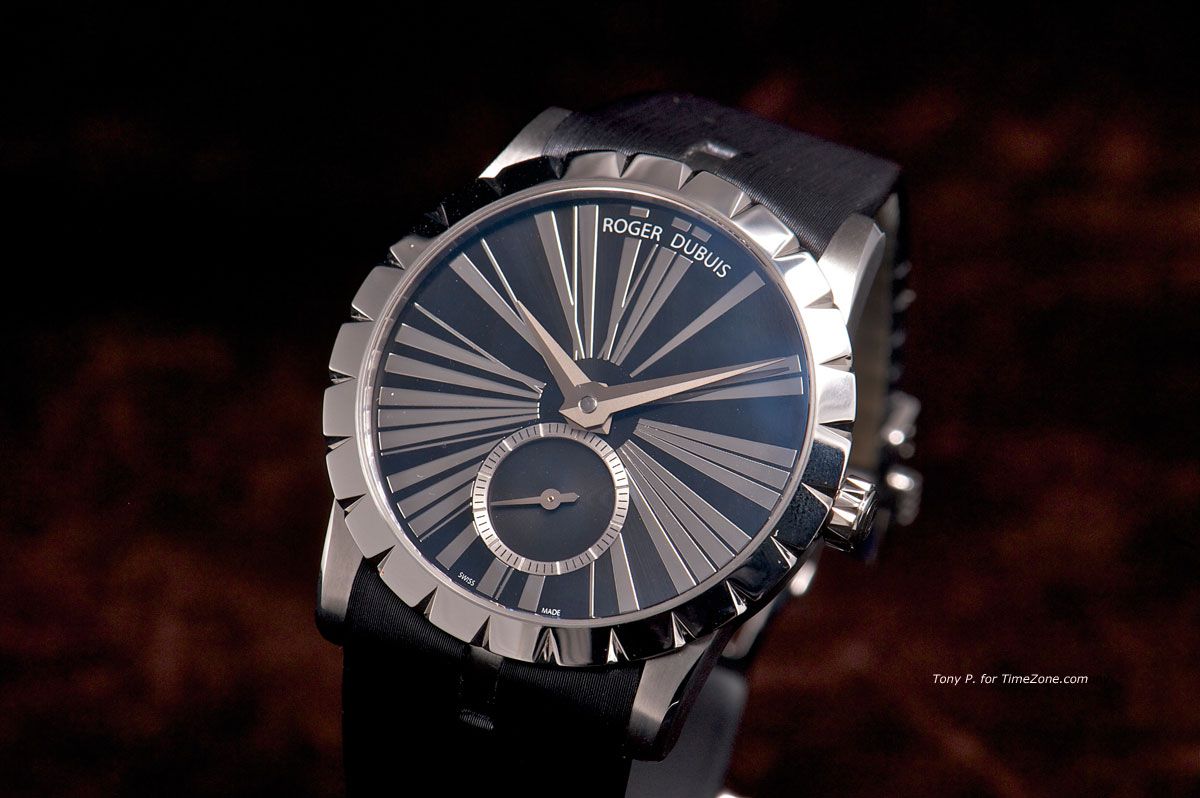
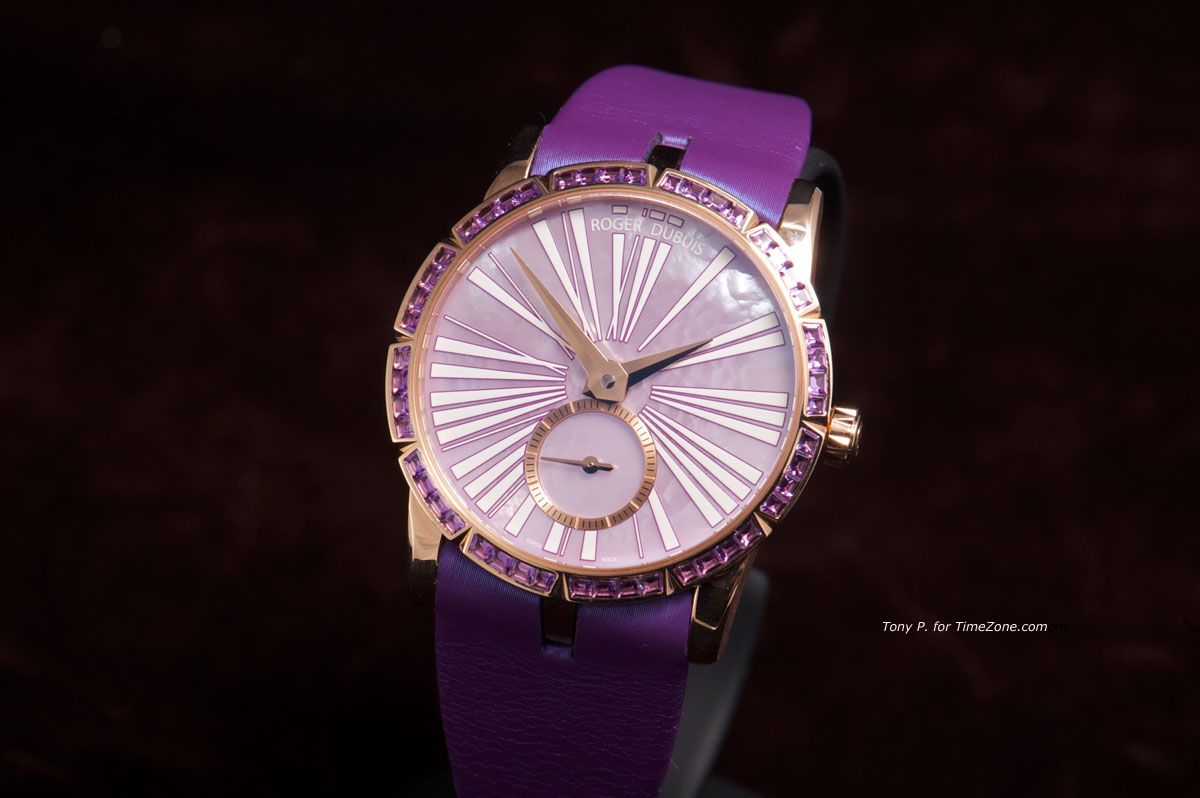
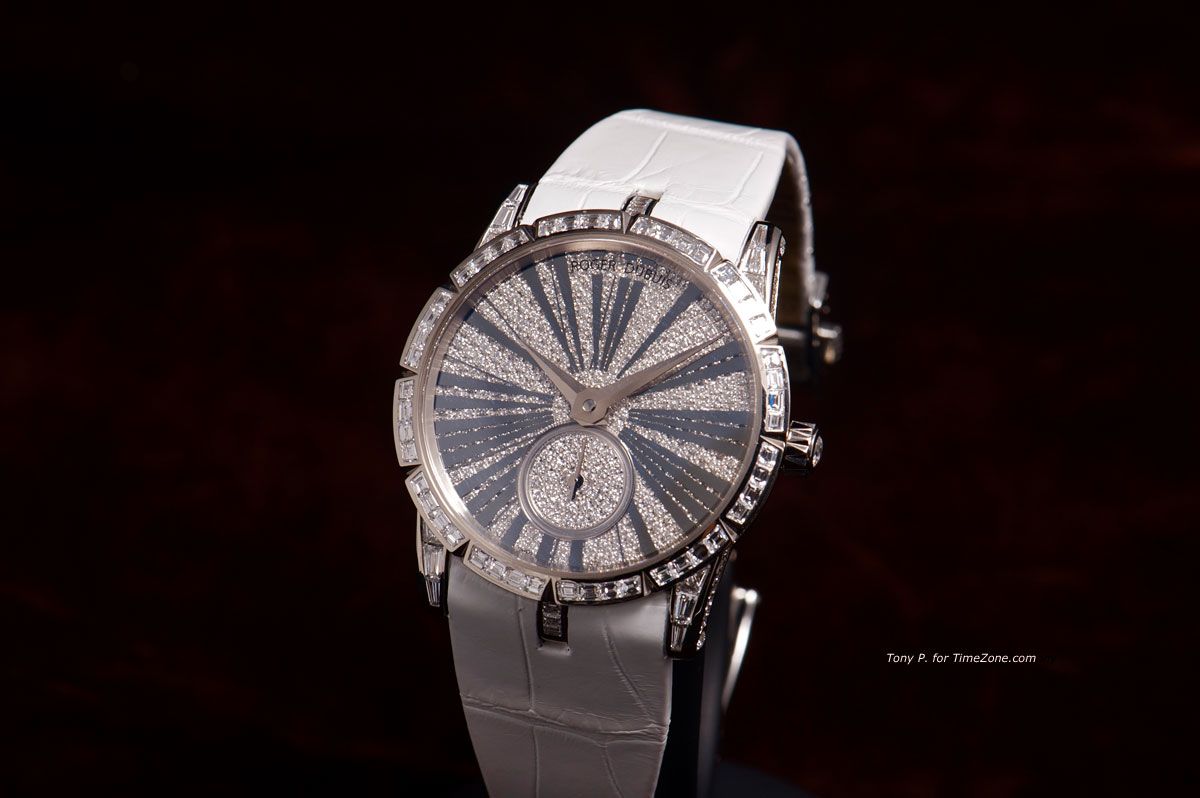
I had always assumed that this was a watch specifically aimed at Oil Sheikhs and Russian Oligarchs, as its flamboyant styling was never designed to appeal to your normal haute horlogerie client. However, there is a large group of people who like colourful watches and have no problem with pieces which have extravagant styling; this group is called ‘women’. So RD have taken the simple path of reducing the size of the Excalibur to a more reasonable 36mm, retained all of the other signature Excalibur features and equipped it with a 11½”’ self winding movement. Available as a simple unadorned timepiece all the way up to fully pavé versions, they make a lot more sense than the more ostentatious models they previously aimed at the feminine market. 


The ladies’ versions of the Excalibur will run from a very affordable 12,000 Swiss Francs up to around twice that 

The truth is that no-one knows if Roger Dubuis will make it in the long term, Richemont has always looked at their corporate plans 5 to 10 years ahead, if they see no future role for RD in their portfolio, they would have no problems with disposing of the brand, either selling it or just closing it down. They have sold other brands in the past, and if they ever did sell the brand, they would (of course) keep the factory which is now fulfilling the role they had in mind when they bought it; making Cartier’s high end movements. But, if I had to make a bet, I would say that RD will survive, I base my judgement on one simple fact; they now make a watch I would like to wear and one that I can (just about) afford. 


Many thanks to Tony P. for his outstanding photography.


(One update) Since I wrote this piece, earlier this year, Dominique Tadion has left RD & now runs the press department at the Federation d' Haute Horlogerie; the folks who run the SIHH.

Monday, 25 July 2011

How Richemont acquired Lange, IWC & JLC

It is now a little over a decade since Richemont acquired three of their main brands and most folk are unaware of how this came about. The piece below is an updated version of an article I wrote at the time.


In October 1999 one of the richest men in Hong Kong decided to sell one of his UK based companies. This decision was to have far reaching ramifications, including the world’s largest contested take-over, interventions by the German Chancellor, the British Prime Minister and the head of Mercedes Benz. When the dust finally settled, almost a year later, three of the greatest names in watchmaking found themselves controlled by a secretive South African family corporation whose headquarters are in Zug, Switzerland & Lichtenstein.


The Hong Kong Billionaire was Li Ka-Shing, owner of huge real estate holdings in the former colony, most of the worlds’ container terminals and a significant player in the international telecommunication field. He remained the largest shareholder in a UK cellular telephone company named Orange, but as the prices for these companies rocketed, he decided it would be time to cash in. He had sold under 5% of the company in February of 1999 and taken a profit of over HK$5 Billion (around $600 Million US) and still retained almost 45% of the shares.


The European cellular telephone market was “hot” because there were usually less than half a dozen companies in each country and as they all used the same technology, it was easy to “plug” someone’s clients & company into yours (if you could afford to buy a company). The new word was “seamless integration” and all the major players were trying. The leading proponents of this strategy in Europe were Mannesmann’s D2 German network and the UK’s Vodaphone, which was in the final stage of absorbing a major US network, Air Touch. The two companies (D2 & Vodaphone) had become allies, each buying minority shareholdings in the many smaller European networks and attempting to build a seamless pan European network.


However this strategy was overturned when Mannesmann approached Li Ka-Shing’s emissaries and proposed their deal. Mannesmann had made the decision to dump the Vodaphone relationship and buy their own UK operator instead because they saw that they would no longer be an equal partner with Vodaphone once it completed its Air Touch acquisition. They feared being swamped by the new giant and Orange was attractive for 2 reasons; firstly, although the smallest of the 4 UK operators; it had the highest income per customer and secondly, almost 45% of the shares were owned by (effectively) one man. So a deal could be done quickly without alerting the stock market, also whilst Vodaphone were in the throes of going through US regulatory hearings, it was hoped that their attention would be diverted.


Mannesmann had one other reason for wanting to put the Orange deal together, the head of the company, Klaus Esser, had worked for years to transform the firm from a heavy engineering company with its roots in steel pipe making into a twenty first century company based in telecoms & computers. As part of his strategy he announced that by the end of 2000 he would have split the company into two, one part the “old economy” the other the new one. Mannesmann’s bid of £20 Billion (approx $33 Billion US) was a significant premium over the market valuation and was intended to do three things; show that Mannesmann had the corporate “cojones” to play in the “big leagues”, also to frighten away other bidders but most importantly to render Mannesmann bid proof from a newly enlarged Vodaphone Air Touch (hereinafter referred to as VA/T). Because the cellular market in the UK is tightly regulated, VA/T would not be able to buy Mannesmann as they would then own two UK networks, if you included Orange and the government regulators do not allow this. Mannesmann’s bid may have demonstrated its self-confidence but that confidence was badly dented when the bid was made public and Mannesmann’s shares fell by 8%, whilst the rest of the market rose.


VA/T did not immediately make an announcement; they played their cards close to their chest and made a private approach to Mannesmann. Mannesmann declined the offer in public and VA/T had no option but to make their bid public. On November 19th, less than 4 weeks after the Mannesmann/Orange deal; they made a bid for the enlarged group, offering a 67% premium over Mannesmann’s share price AFTER the Orange deal. VA/T avoided the Orange “poison pill” by making an almost immediate disposal of Orange an integral part of its offer. The bid was unusual for two reasons, it was the largest merger/bid ever seen in Europe (it was considerably bigger that the Time-Warner/AOL deal for example) and it was, unbelievably to Anglo-Saxons, the FIRST contested takeover in German business history. Klaus Esser, head of Mannesmann disapproved of the bid and made comments to the press along the lines of “This is not the way we do business in Germany” and approached the German Chancellor (Prime Minister) Gerhard Schroeder asking him to intervene. Within days Schroeder gave an interview to a French newspaper saying; "Hostile takeovers destroy corporate culture," he said. "They harm the target but they also, over the medium term, harm the predator." He also decried the culture of “aggressive Anglo-American capitalism”. This was just one of the inept moves made by Esser who consistently misread the market. Vodaphone approached Tony Blair, Britain’s Prime Minister; who called the German Chancellor and intervened on the English company’s side.


However the most important intervention came not from a politician but from a man who could be called the most important man in Germany, Jurgen Schremp, chairman of Daimler Chrysler; Germany’s largest company. He called Klaus Esser and emphasised the fact that his resistance would erode the value that the market now placed on his company. He was also reminded of the fact that at the end of 1999 Esser had claimed that the Mannesmann shares were worth 300DM, he was universally ridiculed for this claim. Now the VA/T offer valued the firm at 375DM, Esser was rapidly running out of options.


The only prospective “White Knight” was the French industrial giant, Vivendi with whom Mannesmann had a couple of joint enterprises. Vivendi was a company, like Mannesmann, also in the process of re-inventing itself, transforming itself from its roots in water treatment & waste management into a communications giant owning advertising agencies, cable & satellite TV companies and internet providers.


The ground was suddenly pulled from under Mannesmann’s feet when suddenly Vivendi & VA/T announced a joint company, Vivazzi, designed to be an Internet portal for the new generation of mobile phones. Mannesmann then did the only thing possible and quietly acquiesced to the takeover. When the dust finally settled VA/T paid £113 Billion (approx $186 Billion US); obviously VA/T had to recoup some of this money very soon. Before the ink was dry on the agreement VA/T and their advisers were knee deep in offers, major European engineering giants such as Thyssen Krupp & Seimens were making unsolicited offers. For example Thyssen Krupp offered €9 Billion (approx $8.7 Billion US) for Mannesmann’s engineering & automotive operations. However VA/T were not interested in running a “fire sale” on the assets of the newly acquired Mannesmann; they chose their bidders carefully; firstly they sold the most highly priced (and prized) asset, Orange. Despite the fact that Mannesmann was widely considered to have overpaid at £20 Billion, VA/T were able to sell the firm to France Telecom for £26 Billion, making a quick profit of £6 Billion (approx $9 Billion US).


The bidding for the tiny segment of the VDO group known as LMH (Les Manufactures Horologères) was opened and initial offers were received from the “usual suspects”; PPR (sometimes known as the Gucci Group) & LMVH. These two French firms had been bitter rivals in the luxury brand market over the last few years, and as both had very deep pockets, it was expected that the bidding would be lengthy & protracted. The other expected bidder was the Richemont group, owner of the Cartier, Montblanc & Dunhill brands; however, as is their traditional way, Richemont said nothing. Nevertheless they were working in the background, and they had one major ace in their hand. They were major shareholders in the French group Vivendi, which they had acquired in September 1999 in exchange for their shares in Canal+ (a French cable operator). The acquisition contained a clause in which Richemont agreed not to sell any of their shares for a year, so they hedged the shares in December, effectively locking in a guaranteed sale price for the following September. This had two effects; they retained their good working relationship with Vivendi and they now had a huge pile of cash arriving in September 2000. Whilst all the other bidders were “sniffing” around LMH, Richemont made an oblique attack; they negotiated with Audemars Piguet, who were the owners of the 40% of Jaeger le Coultre not owned by LMH. These negotiations came to fruit on Thursday 8th June when the two companies announced that they has reached an agreement to co-ordinate their respective positions with respect to the sale of LMH. To all intents and purposes, the game was now over; although there were 7 more weeks to run before the “coup de grace”.


On Thursday 20th July LMH announced that they were in discussion with Richemont as exclusive bidders and the following day the agreement was signed. Richemont would buy LMH for 2,800 Million Swiss Francs and the remaining 40% of Jaeger le Coultre from Audemars Piguet for 280 Million Swiss Francs. Meaning they had paid a total of 3,080 Million Swiss Francs (approx $1.84 Billion US). Richemont were able to pay for the whole deal with cash from its war chest raised from the sale of its Vivendi shares and from the profits on share dealings in one of its tobacco companies.


Looked at dispassionately, it could be said that Richemont seriously overpaid for LMH, who sold 91,000 watches and 3,300 clocks in 1999 and had less than 1,500 retailers worldwide. They paid over $1.2 million per retail outlet, none of whom were LMH exclusive. But Richemont did not get to its towering position by overpaying for anything; I think that this is a very long-term proposition and certainly it is one of the last chances for anyone to buy major watch brands.


The strange thing about this whole enterprise is that no-one ever asks; “Who is Richemont?” I find this very interesting as this is what Richemont wants. All of the attention is focussed on the brands themselves and not on the holding company, in stark contrast to the Swatch group for example. Even the breadth of their holdings is not widely known; sure everyone knows about Cartier, Dunhill, Baume & Mercier, Montblanc and Panerai but how many know of their ownership of Van Cleef & Arpels, Chloe (the fashion house), the Italian fountain pen maker Montegrappa, Piaget, Hackett, Purdey (Gunmakers to the Queen) and Vacheron et Constantin?


The company’s tradition of secrecy began because it was originally South African and during the Apartheid era, South African companies traditionally kept a very low profile. The firm’s roots are in the tobacco business and began when its founder, Dr Anton Rupert, began manufacture of pipe tobacco in his garage (see, it is not just high tech firms which start in them!). In 1943 he was able to buy the South African arm of the giant British drinks firm Distillers and soon after started producing cigarettes. Before long he controlled most of the South African tobacco business and decided to form his divergent holdings into one company, Rembrandt in 1948. Seven years later he set up Richemont in Switzerland to handle all of his operations outside South Africa, leaving Rembrandt to handle the domestic operations. For several years Richemont’s main asset was the Peter Stuyvesant cigarette brand; named after the first mayor of New York (like Rupert, of Dutch ancestry). This was a cigarette packaged to look and smoke like an American cigarette at a time when imported American cigarettes were very expensive in Europe. They followed this with a new brand, Rothman’s, and then began to position the company further upmarket by buying the rights to famous names. This continued the strategy already established by Rothman’s when they bought the licence to make Dunhill cigarettes. In the 1960s and 70s, the profits from cigarettes enabled them to embark upon the acquisition of major companies. . Dunhill was the first company to be bought, in the late 1960s and in 1972 they bought a major shareholding in Cartier Paris (at this time Cartier was composed of 3 separate companies; Paris, London & NYC). Two years later, they bought the London operation and in 1979 the NYC one, giving them complete control of the name & the brand. Their masterstroke was to produce a “diffusion” line for Cartier, Must de Cartier, which became available at a much lower price point and in a much wider distribution network. In so doing, initially with cigarette lighters and then with sunglasses and watches, they increased the value of the company many times over.


So there we have it, a secretive South African owned corporation now controls three of the top brands in horology; but in the end does it really matter who owns the brands? Did anybody care that a giant German engineering corporation used to own them?


In conclusion I think it fair to say that the fate of Jaeger, IWC & Lange was probably the thing farthest from the mind of Li Ka-Shing, when he decided to dispose of his Orange Telecom shares, but the smallest stone sends its ripples to the edge of the lake.


So, where are the major players now when the game finally ends; Li Ka-Shing became one of the largest shareholders in Mannesmann and stayed there until V.A/T took over, when his shares were worth almost 3 times their original price. He “cashed out” and bought a major stake in VoiceStream the leading US cellular operator using the GSM technology used by V.A/T and most of the rest of the world. He subsequently sold VoiceStream to Deutsche Telekom, who then renamed the brand ‘T-Mobile’. He then went on to found the ‘3’ cellular networks across Europe & Asia. V.A/T merged its US operations with one of the “Baby Bells” to become Verizon Wireless, one of the largest cellular operators in the US; thereby giving it major coverage in the one continent it lacked. Vivendi went out and bought MCA, the owners of Universal studios and MCA Music; but, in so doing, outreached themselves and were later forced to sell Universal to General Electric and Dr Anton Rupert lived on in South Africa in contented retirement with his wife in the same house that they have lived in for forty years, until his death in 2006.